
Coaching for Career Change: Strategic Guide for 2026
You've built a successful high-ticket service business generating $250k or more annually, yet you're stuck in a role that no longer serves your vision. The expertise that launched your company now traps you in delivery mode, preventing the strategic leadership your business desperately needs. This paradox affects thousands of women entrepreneurs who've outgrown their founding role but lack a clear pathway forward. Coaching for career change isn't just about switching industries-it's about fundamentally transforming how you show up in the business you've already built.
The Hidden Career Transition Inside Your Business
Most entrepreneurs don't recognize they're experiencing a career transition when scaling from $250k to multi-million dollar revenue. You're technically doing the same work, yet everything has changed. The skills that made you successful-deep client relationships, hands-on delivery, personal involvement in every decision-now create operational bottlenecks that prevent growth.
This internal career shift requires the same strategic navigation as career transition coaching for traditional employment changes. The difference? You're not leaving your company; you're evolving your role within it.
Recognizing When You Need Strategic Career Coaching
The signs of needing coaching for career change within your business manifest distinctly:
- Revenue plateaus despite consistent client demand
- Operational chaos that only you can resolve
- Decision fatigue from being the bottleneck in every process
- Resentment toward client work you once loved
- Team dependency that prevents you from strategic thinking
- Boundary erosion between your role and everyone else's
These symptoms indicate you've outgrown your current career position, even though your business card hasn't changed. The transformation from practitioner to CEO represents one of the most challenging professional transitions you'll navigate.

The Profit Architecture Approach to Career Transformation
Traditional coaching for career change focuses on résumé building, interview skills, and job search strategies. These tactics become irrelevant when your career transition happens inside your existing business. Instead, you need a structured framework that addresses the operational reality of scaling a service company while transforming your professional identity.
The Profit Architecture framework tackles this dual challenge through four interconnected pillars that support both business scaling and founder evolution:
| Pillar | Career Impact | Business Outcome |
|---|---|---|
| Positioning | Establishes you as market authority, not just service provider | Premium pricing and client self-qualification |
| Acquisition | Removes you from sales dependency | Predictable revenue without founder involvement |
| Delivery | Systematizes client outcomes beyond your personal touch | Scalable fulfillment that maintains quality |
| Leadership | Creates boundaries that protect strategic capacity | Clean delegation and operational autonomy |
Why Traditional Career Coaching Misses the Mark
When you hire a career coach without understanding the unique demands of high-ticket service scaling, you risk applying employment-minded solutions to entrepreneurial challenges. Generic career coaches help you "find your passion" or "identify transferable skills"-valuable for job seekers, but irrelevant when you've already built a profitable business that needs your strategic leadership, not your tactical execution.
The coaching you need addresses operational architecture, not just mindset. It recognizes that your career change involves building systems, hiring strategically, and implementing frameworks that allow your business to function without your constant presence.
Positioning: Establishing Your Authority Beyond Delivery
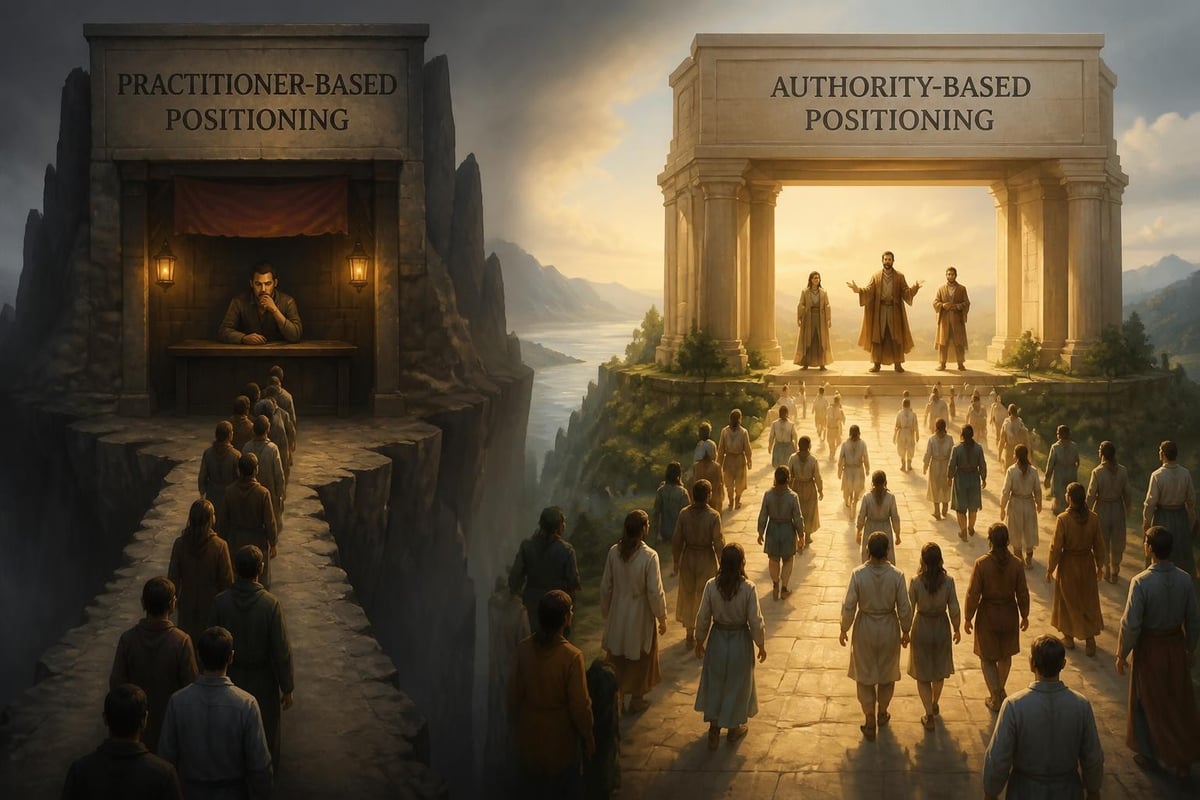
The first pillar of transforming your career within your business involves repositioning yourself from practitioner to authority. This shift isn't about ego; it's about creating market dynamics that support your evolution.
When clients hire you for your personal involvement, you've built a business that requires your career to remain static. Breaking this pattern requires intentional positioning work:
Audit your current market perception – How do prospects describe what you do? If they emphasize your personal delivery, you're positioned incorrectly for scaling.
Develop proprietary frameworks – Transform your expertise into teachable methodologies that others can execute while you maintain strategic oversight.
Shift your content strategy – Move from "how-to" tactical content to strategic thought leadership that positions you as the architect, not the implementer.
Redesign your service offerings – Create packages where your direct involvement becomes the premium exception, not the baseline expectation.
Establish clear boundaries in proposals and contracts about who delivers what, removing assumptions about founder involvement.
This repositioning work directly supports coaching for career change because it creates market permission for your role evolution. When clients expect and value your strategic direction over your tactical execution, you've created the space for your career transition.
The Revenue Impact of Strategic Positioning
Founders who successfully reposition themselves typically see 30-50% increases in pricing power within 6-12 months. This happens not through arbitrary rate increases, but through fundamental shifts in what clients are buying. They're no longer purchasing your time; they're investing in your strategic framework and proven methodology.
Acquisition Systems That Support Your Career Evolution
The second critical element in coaching for career change within your business involves removing yourself from revenue generation. Most high-ticket service founders remain trapped in practitioner roles because they believe "I am the business" when it comes to sales.
This belief system creates a career ceiling that no amount of mindset work can overcome. You need operational solutions, not just psychological ones.
Building Sales Systems That Function Without You
Strategic sales architecture for coaching-oriented career transitions includes:
- Qualification frameworks that filter prospects before they reach you
- Value-based pricing structures that emphasize outcomes over effort
- Signature methodologies that sales team members can articulate confidently
- Decision-making authority distributed across your team appropriately
- Documented processes for proposal creation, negotiation, and closing
When implemented correctly, these systems don't just generate revenue-they validate your new career position as strategic leader. Each sale that closes without your direct involvement proves your business can scale beyond your personal capacity.
The National Career Development Association emphasizes Intentional Change Theory in professional transitions, which applies perfectly here. Your career change requires both the vision of your new role and the concrete behavioral changes (like stepping back from sales) that make that vision real.
Delivery Excellence Without Founder Dependency
The third pillar addresses the most emotionally challenging aspect of coaching for career change for service business owners: letting go of client delivery. Your expertise, your client relationships, and your reputation were built on the quality you personally provided. Stepping back feels like abandoning what made you successful.
Yet this transition represents the essential career evolution that unlocks scaling. Consider how professional career coaching helps clients navigate identity shifts during major transitions-the same principles apply when your identity shifts from "the person who does the work" to "the person who ensures the work gets done excellently."
Creating Delivery Systems That Scale Your Expertise
| Challenge | Solution | Career Impact |
|---|---|---|
| "Nobody can deliver like I do" | Document your methodology into repeatable frameworks | Establishes you as architect, not technician |
| "Clients expect my personal involvement" | Redesign service tiers with clear delivery roles | Creates space for strategic work |
| "Quality will suffer without me" | Implement quality assurance systems and training protocols | Proves leadership capability beyond execution |
| "My team isn't ready" | Build competency development paths aligned with business growth | Demonstrates your capacity to develop talent |
The key insight: coaching for career change in this context means building systems that prove you're more valuable as a leader than as a doer. Every client success that happens without your direct delivery reinforces your new professional identity.
The Emotional Resistance to Role Evolution
Founders frequently resist this transition not because they can't delegate, but because delivery work provides psychological safety. Client work offers immediate validation, clear completion, and tangible impact. Strategic leadership feels ambiguous and uncertain by comparison.
Effective coaching for career change acknowledges this emotional reality while building structural support for your evolution. You need both mindset work and operational frameworks-neither alone suffices.

Leadership Boundaries That Protect Strategic Capacity
The fourth pillar of transforming your career within your business involves establishing boundaries that preserve your capacity for strategic thinking. This represents perhaps the most overlooked aspect of coaching for career change for entrepreneurs.
Traditional career transitions come with built-in boundaries-new office, new team, new responsibilities. When your career evolves within your existing business, you must intentionally create the boundaries that protect your new role.
Types of Boundaries That Enable Career Transformation
Time boundaries: Blocking strategic thinking time that's non-negotiable, just as you'd block client delivery in your previous role. Your calendar reflects your career position.
Decision boundaries: Identifying which decisions require your input and which should be delegated entirely. Each decision you continue making personally keeps you in your old career role.
Communication boundaries: Establishing clear channels for how your team and clients reach you, reflecting your strategic position rather than operational availability.
Scope boundaries: Defining what falls within your role and what doesn't, then consistently honoring those definitions even when it feels easier to "just do it yourself."
Financial boundaries: Setting profitability targets that require your strategic leadership, not just your billable hours, proving your value beyond personal production.
These boundaries aren't about working less; they're about working in alignment with your evolved career position. The approaches to career coaching that Duke University's program emphasizes-personalized guidance and strategic navigation-apply equally to internal career transitions.
The Revenue Math Behind Career Transition
Understanding the financial implications of coaching for career change within your business helps justify the discomfort of transformation. When you remain in practitioner mode, your revenue scales linearly with your time. The math is simple but limiting:
Practitioner Model: Your hours × Your rate = Revenue ceiling
Strategic Leader Model: Team capacity × Systematized value × Market positioning = Scalable revenue
Businesses stuck in the practitioner model typically plateau between $250k-$500k because founder capacity becomes the constraint. Those who successfully navigate this career transition scale to $1M-$5M by multiplying impact through systems and team.
Breaking Through Revenue Plateaus
The transformation from doer to leader typically follows this progression:
- Awareness ($250k-$400k): Recognize you're the bottleneck
- Resistance ($400k-$600k): Try to optimize your personal productivity instead of changing roles
- Acceptance ($600k-$800k): Begin delegating delivery while maintaining sales involvement
- Integration ($800k-$1.5M): Step back from both delivery and sales, focus on strategy
- Mastery ($1.5M+): Lead through systems, frameworks, and team development
Effective coaching for career change accelerates this progression by addressing both the operational and psychological barriers at each stage. The Rise Reign Rule approach specifically targets founders navigating stages 2-4, where operational drag and founder bottlenecks create the most intense resistance.
Selecting the Right Strategic Support
Not all coaching serves your specific career transition needs. Generic career coaching helps job seekers; business coaching often focuses on marketing tactics; executive coaching assumes corporate contexts. What you need is strategic operational coaching that addresses the unique intersection of scaling a service business while transforming your professional role within it.
When evaluating support options, assess these critical factors:
- Revenue context: Does the coaching acknowledge the specific challenges of the $250k-$5M range?
- Operational expertise: Can they help you build systems, not just shift mindset?
- Framework specificity: Do they offer proven methodologies or just general advice?
- Industry relevance: Do they understand high-ticket service business models?
- Transformation focus: Do they address both business scaling and founder evolution?
The guidance professional associations offer on selecting career coaches emphasizes credentials and experience-equally important when choosing strategic support for your internal career transition.
Measuring Success in Your Career Transformation
Unlike traditional career changes where success means landing a new job, your internal career transition requires different success metrics. You're succeeding when:
Revenue becomes less dependent on your personal production: Track the percentage of revenue generated without your direct delivery involvement. Target 70%+ within 12-18 months.
Your calendar reflects strategic work: Measure hours spent on business development, team leadership, and system building versus client delivery and operational firefighting.
Team decisions increase: Count the decisions made independently by your team without your input. This number should grow monthly.
Client outcomes improve: Despite less founder involvement, client results should maintain or exceed previous standards, proving your systems work.
Profitability increases: As you shift to strategic leadership, profit margins typically improve 10-20% because your time is allocated to high-leverage activities.
Strategic projects complete: You finally implement the initiatives you've been "meaning to get to"-market positioning, proprietary IP, team development, operational documentation.
These metrics prove your coaching for career change is working, not just theoretically but operationally.
Common Resistance Patterns and Solutions
The career transition from practitioner to strategic leader triggers predictable resistance patterns that undermine progress. Recognizing these patterns helps you navigate them strategically rather than unconsciously sabotaging your evolution.
"Nobody Can Do It Like I Do" Syndrome
This belief system keeps you trapped in delivery. The solution isn't proving yourself wrong through failed delegation; it's building systems that make your specific approach teachable and replicable. Document your methodology, create quality standards, establish training protocols, and implement feedback loops.
The Guilt Complex
Many founders feel guilty stepping back from client work, interpreting it as selfishness rather than strategic necessity. Reframe this: by scaling your impact through systems and team, you serve more clients better. Your guilt actually limits your potential contribution to your market.
The "I'll Do It When..." Trap
Waiting for the "right time" to transition your role is a procrastination strategy. There's never a perfect moment to evolve your career within your business. You must create the transition through intentional action, not wait for external permission.
The Partial Delegation Problem
Attempting to delegate while maintaining veto power and constant oversight keeps you operationally involved. True coaching for career change requires full delegation with accountability systems, not pseudo-delegation that maintains your bottleneck status.
Building Your Personal Transition Plan
Strategic career transformation requires a structured plan that addresses both the operational and psychological dimensions of change. Your plan should include:
Phase 1: Assessment and Vision (Weeks 1-4)
- Audit current time allocation across all business functions
- Identify specific bottlenecks where you're the constraint
- Define your target role at 12, 18, and 24 months
- Establish baseline metrics for revenue, profitability, and capacity
Phase 2: System Foundation (Months 2-4)
- Document core delivery methodologies
- Create initial team structure and role definitions
- Establish decision-making frameworks and authorities
- Begin selective delegation with clear accountability
Phase 3: Role Transition (Months 5-8)
- Remove yourself from 50%+ of client delivery
- Transfer sales leadership to team members
- Focus time allocation on strategic priorities
- Implement tracking systems for quality and outcomes
Phase 4: Strategic Leadership (Months 9-12)
- Operate primarily in strategic and leadership capacity
- Delegate 80%+ of operational decisions
- Focus on market positioning and business development
- Build systems for continuous improvement without founder dependency
This timeline assumes you're implementing coaching for career change with strategic support and operational frameworks, not attempting the transition through willpower alone.
The Role of External Accountability
While self-awareness initiates career transformation, external accountability sustains it. The pull back to comfortable practitioner work is strong, especially during challenging periods. Strategic support from consultants who understand scaling dynamics provides the external perspective and accountability that prevents regression.
Consider how physician career coaching addresses similar challenges-highly skilled practitioners who must evolve into leadership roles while maintaining clinical excellence. The parallel is striking: your expertise remains valuable, but your career advancement requires stepping into strategic leadership while ensuring operational excellence continues through others.
Coaching for career change within your high-ticket service business isn't about abandoning the company you've built-it's about evolving your role to match the strategic leadership your business needs for scaling beyond founder capacity. The transformation requires both operational systems and psychological readiness, addressing the unique challenges of the $250k-$5M revenue range where founder bottlenecks create the most significant constraints. If you're ready to install the frameworks that support both clean scaling and your career evolution, Rise Reign Rule provides the strategic partnership and proven Profit Architecture methodology designed specifically for women-owned service businesses navigating this critical transition.


