
Coaching Online: Scale Your High-Ticket Practice in 2026
The shift to coaching online has transformed how high-ticket service providers build and scale their businesses. For women founders generating $250k to $5M in revenue, the digital delivery model isn't just about moving sessions to Zoom-it's about installing systems that create predictable profit while removing founder bottlenecks. The question isn't whether to coach online, but how to do it strategically so your expertise translates into scalable client outcomes without sacrificing premium positioning.
The Strategic Case for Digital Coaching Delivery
Coaching online represents far more than operational convenience. When executed with proper architecture, it becomes your competitive advantage in a crowded marketplace.
Research on digital coaching frameworks demonstrates that online delivery can maintain-and often enhance-client outcomes when structured correctly. The key lies in intentional design, not accidental migration.

Why Premium Coaches Transition Online
The strategic advantages compound quickly:
- Geographic expansion without physical overhead or travel fatigue
- Session density that allows 15-20 high-ticket clients weekly instead of 8-10
- Delivery leverage through recorded modules, group intensives, and asynchronous support
- Revenue predictability via subscription models and retainer structures
- Time sovereignty that breaks the income-hours ceiling
For service businesses in the $250k-$5M range, these aren't just lifestyle perks. They're operational necessities for clean scaling. Rise Reign Rule has documented how founders stuck at $400k-$800k revenue typically face identical bottlenecks: they're selling premium expertise but delivering it through founder-dependent, time-intensive methods that cap growth.
The digital delivery model solves this when paired with proper systems architecture.
Positioning Your Online Coaching for Premium Pricing
Market authority doesn't dilute when you move online-it clarifies. But only if you position strategically from day one.
The Authority Triad for Digital Coaches
Your positioning rests on three pillars that work together:
- Specific transformation language that speaks to measurable business outcomes
- Proof mechanisms including case studies, metrics, and client testimonials
- Thought leadership distribution across platforms your ideal clients already consume
Generic "life coach" or "business coach" positioning collapses online because prospects can't differentiate you from thousands of competitors. Premium positioning requires stakes-what specific problem do you solve for whom, and what does success cost them if they don't solve it?
| Positioning Element | Weak Example | Strong Example |
|---|---|---|
| Target Market | "Women entrepreneurs" | "Women-owned service firms, $500k-$2M, stuck scaling" |
| Core Problem | "Lack of clarity and confidence" | "Operational drag creating 60-hour weeks without profit growth" |
| Transformation | "Achieve your goals" | "Install acquisition systems generating 15 qualified leads monthly" |
The corporate coaching landscape demonstrates this principle clearly. Organizations paying $15k-$50k for coaching engagements demand concrete deliverables, measurement frameworks, and accountability structures-not vague promises of transformation.
Your online positioning should mirror this specificity regardless of whether you serve individuals or enterprises.
Building Your Acquisition System for Online Coaching
Coaching online fails commercially when founders rely on referrals and hope. Predictable revenue requires predictable acquisition.

The High-Ticket Online Acquisition Blueprint
Your acquisition architecture needs these components working in sequence:
Top of Funnel: Authority Content
Create educational assets that demonstrate expertise while qualifying prospects. This isn't content marketing for engagement-it's strategic positioning that repels bad-fit leads while attracting ideal clients already problem-aware.
- Long-form articles addressing specific operational challenges
- Video breakdowns of frameworks or methodologies
- Podcast interviews on platforms your market trusts
- LinkedIn thought leadership targeting decision-makers
Middle of Funnel: Conversion Mechanism
The bridge between awareness and sales conversations must filter for commitment and fit. High-ticket coaching online succeeds when you speak only to qualified prospects.
Use application funnels, not open calendars. Require prospects to answer 6-8 questions about their business situation, goals, current challenges, and budget reality before they access your calendar. This single shift eliminates 70% of unqualified conversations.
Bottom of Funnel: Enrollment Process
Your strategy session isn't discovery-it's decision-making. By the time someone reaches this conversation, you've already qualified them. The session confirms fit, presents your methodology, and invites enrollment.
Strong coaches close 60-75% of qualified strategy sessions. If your close rate sits below 50%, your problem isn't sales skill-it's qualification or positioning upstream.
Platform Selection and Technical Infrastructure
The clinician's guide to video platforms offers valuable frameworks for evaluating technical tools, even for non-healthcare coaches. Security, reliability, and client experience should drive platform decisions, not price alone.
Consider your complete technical stack:
- Video delivery: Zoom, Google Meet, or specialized coaching platforms
- Scheduling automation: Calendly, Acuity, or SavvyCal with buffer rules
- Payment processing: Stripe or PayPal with subscription logic
- Client portal: Kajabi, Circle, or custom solutions for resource delivery
- CRM backbone: HubSpot, Copper, or Close for pipeline management
Integration matters more than individual tool quality. Your stack should pass data seamlessly so you're not manually updating spreadsheets or chasing payment confirmations.
Delivery Architecture That Scales
Coaching online becomes profitable when you shift from purely synchronous time-for-money delivery to leveraged models that maintain premium outcomes.
The Three-Tier Delivery Model
Structure your coaching delivery across three formats:
Tier One: Asynchronous Curriculum
Pre-recorded modules, frameworks, templates, and resources clients consume independently. This tier delivers knowledge transfer and foundational concepts, freeing your synchronous time for higher-value application work.
Build this once, deliver infinitely. Your asynchronous curriculum should represent 40-50% of total client transformation.
Tier Two: Group Intensives
Monthly or bi-weekly group sessions where clients implement, troubleshoot, and receive coaching on specific challenges. The group format creates peer accountability while giving you session leverage-you're serving 8-12 clients simultaneously instead of one.
Group intensives should handle 30-35% of transformation delivery.
Tier Three: Private Coaching
Individual sessions focused on customization, high-stakes decisions, and personalized strategy. This is your premium offering, priced accordingly and protected strategically.
Limit private access to 15-20% of total delivery. When clients pay $15k-$50k for your coaching online, they're buying your strategic thinking on their specific situation-not unlimited access to your calendar.
| Delivery Format | Time Investment | Client Value | Scalability |
|---|---|---|---|
| 1:1 Sync Only | 100% founder time | High customization | No leverage |
| Hybrid (Group + Private) | 40% founder time | High outcomes + community | Moderate leverage |
| Leveraged (Async + Group + Private) | 25% founder time | Exceptional outcomes + efficiency | High leverage |
Research from the CIPD on coaching and digital delivery confirms that blended models often outperform purely synchronous approaches for both outcomes and participant satisfaction when properly structured.
Installing Boundaries and Leadership Systems
The hidden killer of coaching online businesses isn't marketing or delivery-it's founder availability creep.
The Boundary Architecture Framework
Without clear operational boundaries, digital delivery becomes 24/7 accessibility. Clients Slack you at 9pm. You answer emails on weekends. Your "freedom business" becomes a prison of your own making.
Communication Protocols
Define and contractually establish:
- Response time expectations (24-48 business hours, not immediate)
- Approved communication channels (email and portal, not text or personal social media)
- Emergency escalation criteria (almost nothing qualifies)
- Office hours for live interaction
Scope Containers
Every coaching engagement needs defined deliverables and boundaries:
- Session frequency and duration (e.g., two 60-minute sessions monthly)
- Review/feedback turnaround times for submitted work
- Revision or iteration limits on strategic documents
- Renewal and exit processes
Explore how structured service delivery creates both client satisfaction and founder sustainability in high-ticket businesses.
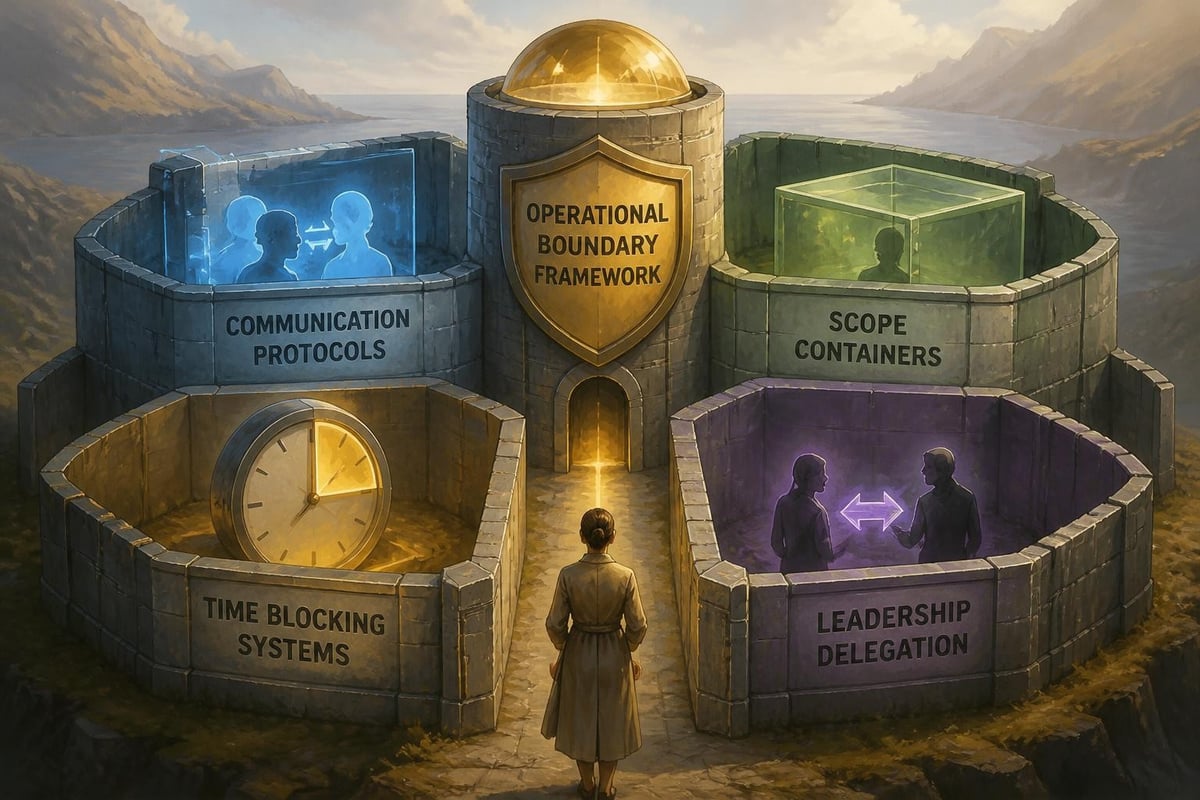
Calendar Architecture
Your calendar is your profit protection system:
- Block creation time weekly (non-negotiable, no client sessions)
- Batch client sessions into 2-3 days maximum
- Build buffer time between sessions (15-30 minutes)
- Protect one full day weekly for strategic business work
Women founders scaling past $500k often resist boundaries, fearing client dissatisfaction. The opposite proves true: clear containers increase client results because they force focused implementation rather than dependency.
Metrics and Financial Management
Coaching online without numbers is gambling. Install measurement systems from day one.
The Essential Metrics Dashboard
Track these weekly:
Acquisition Metrics
- Application volume and source
- Application-to-strategy-session conversion rate
- Strategy-session-to-enrollment conversion rate
- Customer acquisition cost (total marketing spend ÷ new clients)
Delivery Metrics
- Client attendance rates for group sessions
- Module completion percentages
- Client satisfaction scores (NPS quarterly)
- Testimonial and case study acquisition
Financial Metrics
- Monthly recurring revenue
- Average contract value
- Client lifetime value
- Gross profit margin (revenue minus direct delivery costs)
When your metrics show 40% strategy-session-to-enrollment conversion, you don't need more leads-you need better qualification or stronger positioning. When client attendance drops below 75%, your content isn't landing or your clients aren't the right fit.
Data removes guesswork and reveals exactly where to focus improvement efforts. The team at Rise Reign Rule uses proprietary Profit Architecture diagnostics to identify these bottlenecks in minutes, not months.
Scaling Past Founder Dependency
The final frontier in coaching online is removing yourself as the primary delivery vehicle without degrading outcomes or margins.
The Leveraged Coach Model
This requires three strategic moves:
Standardize Your Methodology
Document your coaching frameworks, decision trees, and processes so thoroughly that another trained coach could deliver 80% of client value. This isn't commodification-it's operational excellence.
Create:
- Session playbooks with learning objectives and facilitation guides
- Assessment tools and diagnostic frameworks
- Implementation templates and worksheets
- Quality control checklists
Train Associate Coaches
Hire experienced coaches who can execute your methodology under your brand. Pay them well (40-50% of session fees), train them extensively, and hold them accountable to client outcomes.
Your role shifts from delivery to quality assurance, strategic oversight, and business development.
Architect Certification or Train-the-Trainer Programs
The ultimate leverage in coaching online: teach other coaches your methodology and charge licensing fees. This works only after you've proven repeatable results across diverse client situations.
Technology and Automation Strategy
Strategic automation multiplies your effective capacity without hiring. But automate the wrong things and you create robotic experiences that repel premium clients.
The Automation Priority Matrix
Automate Completely:
- Payment processing and invoicing
- Scheduling and calendar management
- Email sequences for onboarding and offboarding
- Resource delivery and portal access
- Client intake forms and assessments
Automate Partially:
- Lead nurture sequences (automated delivery, personalized content)
- Session reminders and preparation prompts
- Progress tracking and milestone celebrations
- Feedback requests and testimonial gathering
Never Automate:
- Initial sales conversations
- Strategic coaching sessions
- Crisis intervention or sensitive conversations
- Contract negotiations for high-value clients
- Authentic relationship-building touchpoints
The businesses that scale smoothly maintain human connection at critical moments while automating everything else ruthlessly.
Legal and Ethical Considerations
Coaching online crosses jurisdictions, raises data privacy questions, and requires clear professional boundaries.
Protect Your Business and Clients
Work with legal counsel to create:
- Coaching agreements that define scope, limitations, and mutual responsibilities
- Terms of service covering payment, cancellation, and dispute resolution
- Privacy policies explaining data collection, storage, and usage
- Disclaimers clarifying you're not providing therapy, legal advice, or financial advice (unless licensed)
Store client data securely. Use encrypted platforms. Understand basic GDPR and CCPA requirements if serving international or California clients.
Professional liability insurance costs $500-$1,500 annually and protects against claims related to your advice or services.
Coaching online profitably requires more than strong facilitation skills-it demands operational architecture that creates predictable client acquisition, leveraged delivery, and founder freedom. When you install proper systems across positioning, sales, delivery, and leadership, you transform from overworked solo practitioner to scalable business owner. If you're ready to build this foundation in your high-ticket service business, Rise Reign Rule specializes in installing Profit Architecture that eliminates bottlenecks and creates clean growth for women founders generating $250k-$5M annually.


