
Building a Coaching Team That Drives Revenue Growth
You've built your high-ticket service business to the $250k-$5M range, and now you're facing a painful truth: you can't scale further without duplicating yourself. Every client delivery depends on you. Every strategic decision waits for your approval. Every team member needs your guidance. This is where a coaching team becomes your most powerful scaling asset. When structured correctly, a coaching team transforms your business from founder-dependent chaos into a profit-generating machine that operates with or without your constant presence.
The Strategic Case for Building a Coaching Team
Most women founders I work with resist building a coaching team for one simple reason: they believe they're the only ones who can deliver results. This limiting belief costs them millions in unrealized revenue.
A properly structured coaching team doesn't just handle overflow. It multiplies your impact, standardizes your methodology, and creates the operational freedom that allows you to work on positioning and market authority instead of being buried in delivery. According to research on managerial coaching and team performance, strategic coaching interventions directly improve team outcomes when implemented with clear frameworks and boundaries.
Here's what changes when you build a coaching team:
- Your revenue ceiling lifts because delivery capacity expands
- Client outcomes improve through specialized expertise
- Your founder bottleneck dissolves as others own delivery
- Profit margins increase with leveraged time
- Market positioning strengthens through thought leadership focus
The financial impact is undeniable. When you shift from solo delivery to a coaching team model, you transform your business economics. One founder billing 40 hours weekly at premium rates hits a hard ceiling. A coaching team of three, each handling 30 billable hours weekly, triples your delivery capacity while freeing you to focus on the $10,000-per-hour activities that actually scale businesses.

Designing Your Coaching Team Architecture
Building a coaching team requires the same strategic thinking you apply to your Profit Architecture. You can't just hire people who "seem like coaches" and hope they replicate your results. You need a deliberate structure that aligns with your positioning, acquisition, delivery, and leadership pillars.
Mapping Coaches to Your Delivery Framework
Start by auditing your current client delivery process. What are the distinct phases or specializations within your methodology? In most high-ticket service businesses, delivery breaks into strategic phases that different coaches can own.
| Delivery Phase | Coaching Focus | Ideal Coach Profile |
|---|---|---|
| Onboarding & Foundation | Mindset, clarity, quick wins | Process-oriented, empathetic |
| Implementation & Systems | Operational execution, accountability | Detail-focused, systematic |
| Scale & Optimization | Advanced strategy, delegation | Strategic, experienced |
| Leadership & Maintenance | Boundaries, sustainability | Leadership background |
This structure ensures every client receives specialized support at each stage rather than generalized coaching throughout. It also creates clear career paths within your coaching team, which improves retention and performance.
Setting Clear Boundaries and Authority Levels
Your coaching team needs defined decision-making authority. Without it, you recreate the founder bottleneck you're trying to eliminate. High-performance coaching requires coaches who can make real-time decisions within their scope.
Establish three authority levels:
- Full Authority: Decisions coaches make independently (session rescheduling, resource recommendations, tactical advice within framework)
- Consultation Required: Decisions requiring team discussion (methodology adjustments, client escalations, scope modifications)
- Founder Approval: Strategic decisions only you make (refunds, major pivots, framework changes)
Most founders get this backwards. They require approval for trivial decisions while delegating strategic ones by default. This destroys team confidence and perpetuates bottlenecks.
Recruiting and Vetting Coaching Team Members
Finding the right coaches is fundamentally different from hiring employees. You're not looking for task-completers. You're recruiting strategic partners who will represent your methodology and directly impact client outcomes.
The biggest mistake? Hiring based on credentials instead of capability. A certification doesn't guarantee someone can deliver your specific framework to your specific clientele. I've seen founders waste six months and $50,000 on "certified coaches" who couldn't execute the actual delivery model.
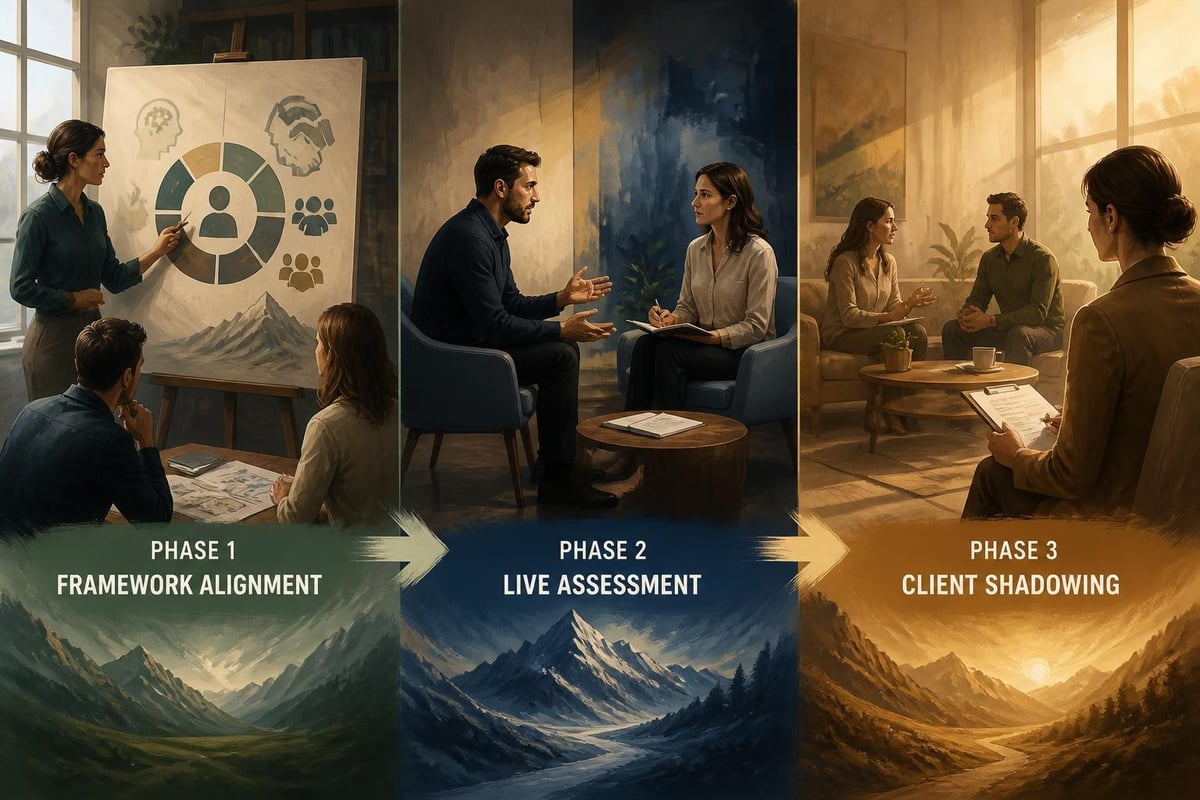
The Three-Phase Vetting Process
Phase One: Framework Alignment
Before you discuss compensation or logistics, test whether candidates understand your business philosophy. Share your framework documentation and ask them to submit a written analysis of how they'd apply it to a real client scenario. This eliminates 70% of unsuitable candidates immediately.
Phase Two: Live Delivery Assessment
Have finalists conduct a mock coaching session using your methodology. Record it. Evaluate not just what they say, but how they hold boundaries, navigate resistance, and drive toward outcomes. This reveals whether they can actually execute your standards.
Phase Three: Client Shadow Period
The final candidates shadow you on real client calls for 2-3 weeks before any hiring decision. They observe your language, frameworks, and client management approach. Then they debrief with you, demonstrating their ability to absorb and replicate your methodology.
This process feels lengthy, but it prevents catastrophic hiring mistakes. One wrong coaching team member can damage client relationships, tarnish your reputation, and create expensive cleanup work that negates any leverage benefits.
Training Your Coaching Team for Consistent Delivery
Even exceptional coaches need structured onboarding to deliver your specific methodology. This is where most founders fail. They assume talented people will "figure it out" through osmosis. Research on workplace coaching effectiveness shows that structured coaching frameworks with clear training protocols produce significantly better outcomes than ad-hoc approaches.
Building Your Coaching Playbook
Your coaching team needs a comprehensive playbook that documents every aspect of your delivery system. This isn't a generic coaching manual. It's your proprietary methodology translated into actionable protocols.
Essential playbook components:
- Session structure templates for each client phase
- Scripted frameworks for common client challenges
- Boundary-setting language and escalation protocols
- Client outcome measurement criteria
- Quality assurance checkpoints and review processes
The playbook should be detailed enough that a skilled coach can deliver 80% of your methodology without asking questions, while leaving 20% room for their expertise and personality to enhance the experience.
Implementing Weekly Calibration Sessions
Your coaching team needs regular calibration to maintain delivery consistency. Schedule weekly 90-minute sessions where coaches share client scenarios, discuss methodology applications, and align on framework interpretation.
These sessions serve three purposes: they ensure consistency across the coaching team, they create peer learning opportunities, and they surface methodology gaps that need founder attention. They also build team cohesion, which directly impacts client results.
| Calibration Element | Time Allocation | Primary Outcome |
|---|---|---|
| Case Study Reviews | 30 minutes | Consistency check |
| Methodology Q&A | 20 minutes | Framework clarity |
| Client Win Sharing | 15 minutes | Best practice spread |
| Framework Evolution Discussion | 25 minutes | Continuous improvement |
Creating Accountability Systems That Maintain Standards
A coaching team without accountability systems eventually drifts from your standards. Clients receive inconsistent experiences. Results vary. Your reputation suffers. You need measurement systems that protect quality while respecting coach autonomy.
Defining Success Metrics Beyond Revenue
Yes, revenue matters. But your coaching team's performance extends beyond billable hours. You need multidimensional metrics that capture the full value delivery.
Track these five categories:
- Client Outcome Metrics: Specific results clients achieve during coaching engagement
- Engagement Quality: Session attendance rates, homework completion, client satisfaction scores
- Methodology Adherence: Framework usage consistency, protocol compliance rates
- Professional Development: Coach skill growth, certification progress, training completion
- Team Collaboration: Peer support contributions, knowledge sharing, calibration participation
These metrics create a balanced scorecard that prevents coaches from gaming any single metric while neglecting others. When you measure what matters, your coaching team optimizes for actual client outcomes instead of vanity numbers.
Implementing Peer Review and Quality Assurance
Your coaching team should review each other's work regularly. This isn't about creating competitive tension. It's about collective excellence and continuous improvement. Similar to research on coaching interventions for early-career professionals, peer feedback systems significantly improve coaching effectiveness when structured properly.
Each coach submits one recorded session monthly for peer review. The reviewing coach provides written feedback using your quality rubric. Both coaches discuss the feedback in a private debrief. This creates psychological safety while maintaining standards.
Structuring Compensation That Aligns Incentives
How you pay your coaching team determines what behaviors you get. Most founders default to hourly rates or flat salaries, then wonder why coaches don't drive results. Your compensation structure should reward the outcomes you actually want.
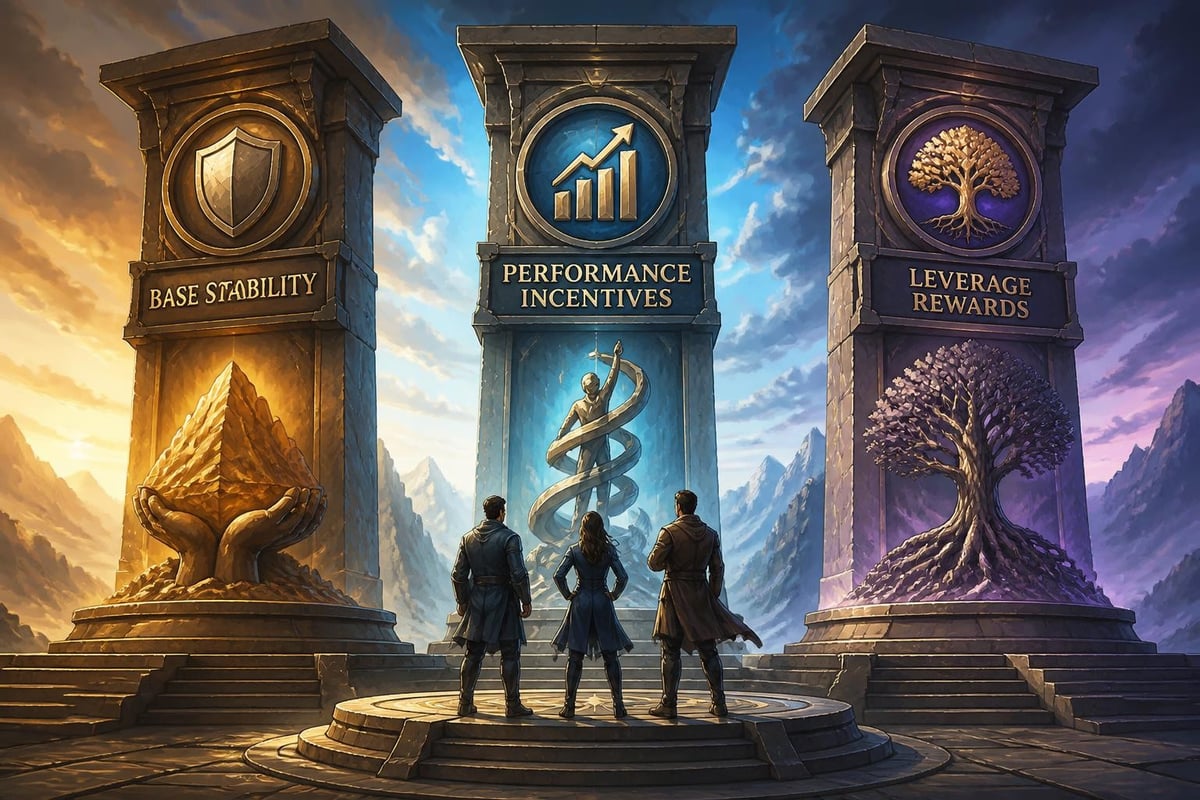
The Three-Component Compensation Model
Base Compensation (40% of total package): This covers the coach's time commitment and creates financial stability. It can be salary or retainer-based, depending on employment structure.
Performance Bonuses (30% of total package): Tied directly to client outcome metrics. If clients achieve specific results, coaches earn bonuses. This aligns coach incentives with client success.
Leverage Incentives (30% of total package): Rewards coaches for activities that scale the business: creating training content, mentoring junior coaches, systematizing delivery processes, contributing to framework evolution.
This structure ensures coaches focus on what matters: client results, business growth, and continuous improvement. It also creates natural career progression pathways within your coaching team.
Example compensation breakdown for a mid-level coach:
- Base: $4,000/month retainer
- Performance: Up to $3,000/month based on client outcomes
- Leverage: Up to $3,000/month for scaling contributions
- Total potential: $10,000/month
The variable components keep coaches invested in excellence while the base provides stability. This balance attracts high-performers who want both security and upside.
Leveraging Technology for Coaching Team Efficiency
Your coaching team needs technological infrastructure that supports consistency, tracks performance, and reduces administrative friction. The right tools multiply effectiveness. The wrong ones create busywork that distracts from client delivery.
Essential Technology Stack Components
Client Management System: Centralized platform where all client information, session notes, progress tracking, and communication history lives. This ensures any coaching team member can support any client without information gaps.
Session Recording and Review Tools: Every coaching session should be recorded (with client permission) for quality assurance, training purposes, and client reference. This protects both coaches and clients while creating improvement opportunities.
Framework Delivery Platform: Your proprietary methodology needs a dedicated delivery system where coaches access templates, protocols, and resources. This could be a custom portal, a structured learning platform, or a well-organized shared workspace.
Performance Dashboard: Real-time visibility into the metrics that matter. Coaches see their performance data. You see team-wide trends. Everyone understands where they stand and where improvement is needed.
The technology should feel invisible. If your coaching team spends more time managing tools than delivering value, you've over-engineered the stack.
Scaling Your Coaching Team Without Diluting Quality
Growth for growth's sake destroys businesses. Your coaching team should scale deliberately, maintaining quality standards while expanding capacity. This requires systems thinking and disciplined execution.
The 80% Capacity Rule
Never let your existing coaching team exceed 80% capacity before recruiting additional members. When coaches hit 100% capacity, quality declines, burnout increases, and client experience suffers. The 80% threshold gives you runway to recruit, train, and integrate new coaches before emergency hiring becomes necessary.
Capacity indicators to monitor:
- Average session load per coach per week
- Client satisfaction scores trending direction
- Coach stress/burnout self-assessments
- Quality assurance metric performance
- Waitlist length and client onboarding delays
When three of these five indicators flash warning signs, initiate recruiting for your next coaching team member. This proactive approach prevents the quality dips that damage reputation and client results.
Creating Coaching Team Tiers and Career Paths
Your coaching team needs clear advancement pathways. Without them, you lose top performers to competitors or entrepreneurship. Structure your team in tiers that recognize growing expertise while creating motivation for excellence.
| Tier | Experience Level | Client Complexity | Compensation Range | Advancement Criteria |
|---|---|---|---|---|
| Associate Coach | 0-12 months | Foundational clients | $3k-$6k/month | Methodology mastery, outcome delivery |
| Senior Coach | 1-3 years | Standard complexity | $6k-$12k/month | Consistent excellence, peer leadership |
| Lead Coach | 3+ years | High complexity | $12k-$20k/month | Framework innovation, team development |
| Coaching Director | 5+ years | Strategic oversight | $20k+/month | Business impact, coaching team leadership |
This structure creates clear expectations and motivates continuous improvement. It also protects you from coaches who plateau while collecting premium compensation.
Protecting Your Intellectual Property and Client Relationships
Your coaching team has access to your proprietary methodology and direct relationships with your clients. Without proper protections, you risk coaches becoming competitors or taking clients when they leave. Legal and operational safeguards aren't optional in this model.
Essential Legal Protections
Work with an attorney experienced in service businesses to create ironclad agreements. Your coaching team contracts should include non-compete clauses (where legally enforceable), non-solicitation agreements, intellectual property assignment provisions, and confidentiality requirements.
The non-solicitation clause is particularly critical. It prevents departing coaches from contacting your clients for a specified period (typically 12-24 months) after leaving your coaching team. This protects the client relationships you've invested in building.
Operational IP Protection Strategies
Legal documents matter, but operational practices provide your first line of defense. Segment information so coaching team members access only what they need for current client delivery. Don't give everyone full access to your entire client database or complete methodology documentation.
Create distinct client touchpoints where you maintain direct relationships alongside the coaching team. Quarterly strategy sessions, annual reviews, or exclusive founder office hours ensure clients remain connected to you, not just their assigned coach. This also demonstrates the premium value of working directly with your business rather than just any coaching team member.
Managing Coaching Team Dynamics and Conflict
Wherever humans collaborate, conflict emerges. Your coaching team will experience personality clashes, methodology disagreements, and competitive tensions. How you handle these situations determines whether your team becomes stronger or fractures.
Establishing Clear Communication Protocols
Most team conflict stems from unclear expectations and poor communication. Prevent this by establishing explicit protocols for how your coaching team communicates about clients, challenges, and concerns.
Required communication channels:
- Client Handoffs: Structured documentation when clients transition between coaches
- Escalations: Clear process for elevating client issues requiring founder attention
- Peer Support: Defined channels for coaches to request help from teammates
- Feedback Loops: Regular opportunities to share observations and suggestions
The goal isn't controlling every conversation. It's ensuring important information flows efficiently to the right people at the right time.
Addressing Performance Issues Directly
When a coaching team member underperforms, address it immediately and directly. Delayed feedback creates resentment among high performers who compensate for weak links. It also allows quality issues to compound, damaging client outcomes.
Use a three-step performance management process: private conversation identifying specific gaps, written improvement plan with measurable goals and timeline, and follow-up assessment. If improvement doesn't materialize, exit the coach quickly and professionally. Your obligation is to your clients and your business, not to coaches who can't meet standards.
Understanding the difference between mentoring and consulting helps you clarify role expectations and prevent confusion about what coaching team members should deliver.
Integrating Your Coaching Team Into Client Acquisition
Your coaching team shouldn't just deliver services. They should contribute to business growth through client acquisition activities. This expands their impact while accelerating your scaling trajectory.
Leveraging Coaching Team Expertise for Content Creation
Each coaching team member brings unique perspectives and client success stories. Channel this into content that attracts ideal clients. Have coaches contribute to blog posts, case studies, podcast episodes, and social media content.
This serves multiple purposes: it positions your coaching team as experts (which elevates your business credibility), it creates authentic content based on real client work, and it gives coaches visibility that motivates excellence. Clients love seeing the depth of expertise throughout your entire team, not just at the founder level.
Structuring Discovery Call Participation
Bring senior coaching team members into your sales process strategically. After you've qualified a prospect and conducted initial positioning, have a lead coach join a follow-up call to discuss delivery specifics and answer implementation questions.
This accomplishes three goals: it demonstrates the caliber of your coaching team (which justifies premium pricing), it allows prospects to experience your team's expertise before buying, and it frees you from every sales conversation while maintaining conversion rates.
Measuring and Optimizing Coaching Team ROI
Your coaching team represents significant investment. You need clear ROI measurement to ensure this investment generates returns that justify the cost and complexity.
Calculating True Coaching Team ROI
Most founders measure coaching team ROI too simplistically. They compare coach compensation to revenue generated and call it done. This misses critical factors.
Comprehensive ROI formula components:
- Direct Revenue: What coaching team members bill directly
- Founder Time Liberation: Hours freed for high-value activities × your effective hourly rate
- Capacity Expansion: Additional clients served that were previously impossible
- Client Outcome Improvement: Better results leading to referrals and retention
- Operational Efficiency: Systems created and refined by coaching team
- Subtract Full Costs: Compensation, training time, management overhead, technology costs
When calculated properly, a high-performing coaching team typically generates 3-5x ROI in the first year and 5-10x ROI once fully integrated. If your numbers fall short, investigate whether you have a hiring problem, a training problem, or a structure problem.
Building effective sales coaching systems within your team ensures revenue generation remains strong as you scale delivery capacity.
Your coaching team determines whether you break through the founder bottleneck or remain trapped in it forever. The difference between six-figure struggle and seven-figure freedom often comes down to your ability to replicate yourself through others while maintaining the standards that built your reputation. If you're ready to install the systems that transform your high-ticket service business from founder-dependent to truly scalable, Rise Reign Rule specializes in helping women-owned businesses build the operational architecture that creates predictable profit and clean scaling.


