
Find a Coach: Strategic Guide for Scaling Your Business
When your business hits the $250k revenue mark and you're eyeing seven figures, the problems you face shift dramatically. You're no longer learning how to get clients; you're wrestling with operational chaos, team bottlenecks, and the nagging sense that working harder won't solve what's broken. This is precisely when many high-ticket service founders decide to find a coach. But here's the uncomfortable truth: most coaches will waste your time and money because they don't understand the specific architecture required to scale a service business past founder dependence.
The decision to find a coach isn't just about personal development or accountability. For women-owned service businesses generating $250k to $5M annually, coaching represents a strategic investment in dismantling the ceiling you've built around your own capacity. The right coach doesn't just motivate you; they install systems that make your expertise transferable, your sales predictable, and your profit margins defensible.
Why Most Coaching Searches Fail Before They Begin
The coaching industry is fundamentally unregulated, which means anyone can hang a shingle and call themselves a business coach tomorrow. This creates a paradox: the moment you most need expert guidance is precisely when you're least equipped to distinguish real expertise from polished marketing.
When you decide to find a coach, you're often making that decision from a place of pain. Revenue has plateaued. Your team needs constant supervision. Client delivery drains you. In this state, testimonials and Instagram success stories become dangerously persuasive. You're vulnerable to coaches who've never operated at your revenue level, never managed a team, and certainly never solved the specific problems inherent to high-ticket service delivery.
The Critical Distinction Most Founders Miss
Before you invest time and capital to find a coach, you need absolute clarity on what you're actually buying. Understanding the difference between mentors, sponsors, and coaches prevents expensive misalignment. A mentor shares wisdom from their journey. A sponsor opens doors using their influence. A coach systematically solves specific business problems using replicable frameworks.
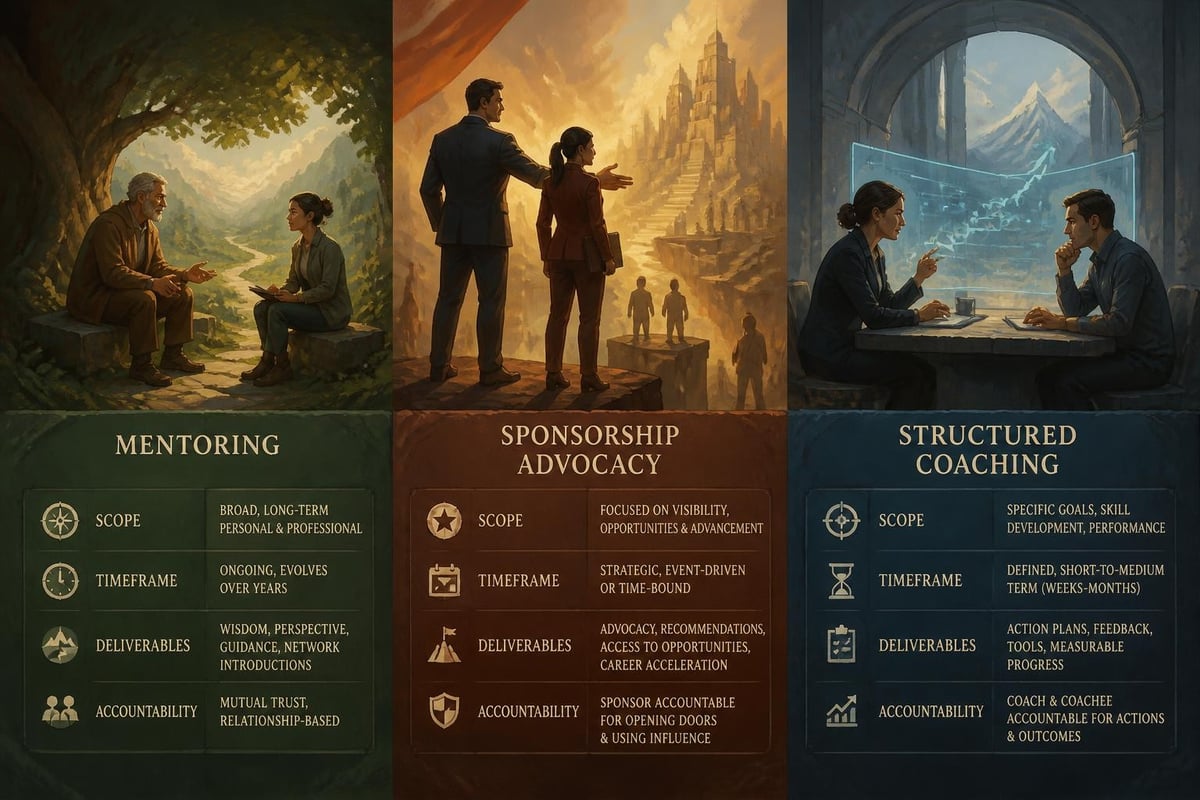
For scaling service businesses, you need the third category: someone who can diagnose operational drag, prescribe architecture changes, and hold you accountable through implementation. Anything less is expensive friendship.
The Four Non-Negotiables When You Find a Coach
Most founders evaluate coaches on charisma and relatability. These matter, but they're insufficient. You need a rigorous vetting framework that prioritizes evidence over emotion.
1. Revenue-Relevant Experience
Your coach must have built, scaled, or consulted for businesses at or above your revenue level. This isn't snobbery; it's strategic necessity. The challenges of moving from $300k to $1M are categorically different from moving from $50k to $300k. If your prospective coach hasn't navigated capital allocation decisions, team structure pivots, or margin compression at scale, they're theorizing, not coaching.
When you explore strategic services designed for your stage, you'll notice the language shifts from "mindset" to "architecture." That shift signals experience with real operational complexity.
2. Framework Over Feelings
Motivation fades. Systems endure. When you find a coach, demand to see their proprietary methodology before you sign anything. What specific frameworks do they use? How do those frameworks address positioning, acquisition, delivery, and leadership simultaneously?
| Evaluation Criteria | Red Flag | Green Flag |
|---|---|---|
| Methodology | "Customized to each client" | Named framework with documented components |
| Process | "We'll figure it out together" | Clear phases, milestones, deliverables |
| Measurement | "You'll feel the difference" | Specific KPIs tracked monthly |
| Accountability | Weekly motivational calls | Implementation audits with consequences |
The absence of structure suggests the coach is winging it. You can't afford to pay premium rates for improvisation.
3. Evidence of Client Transformation
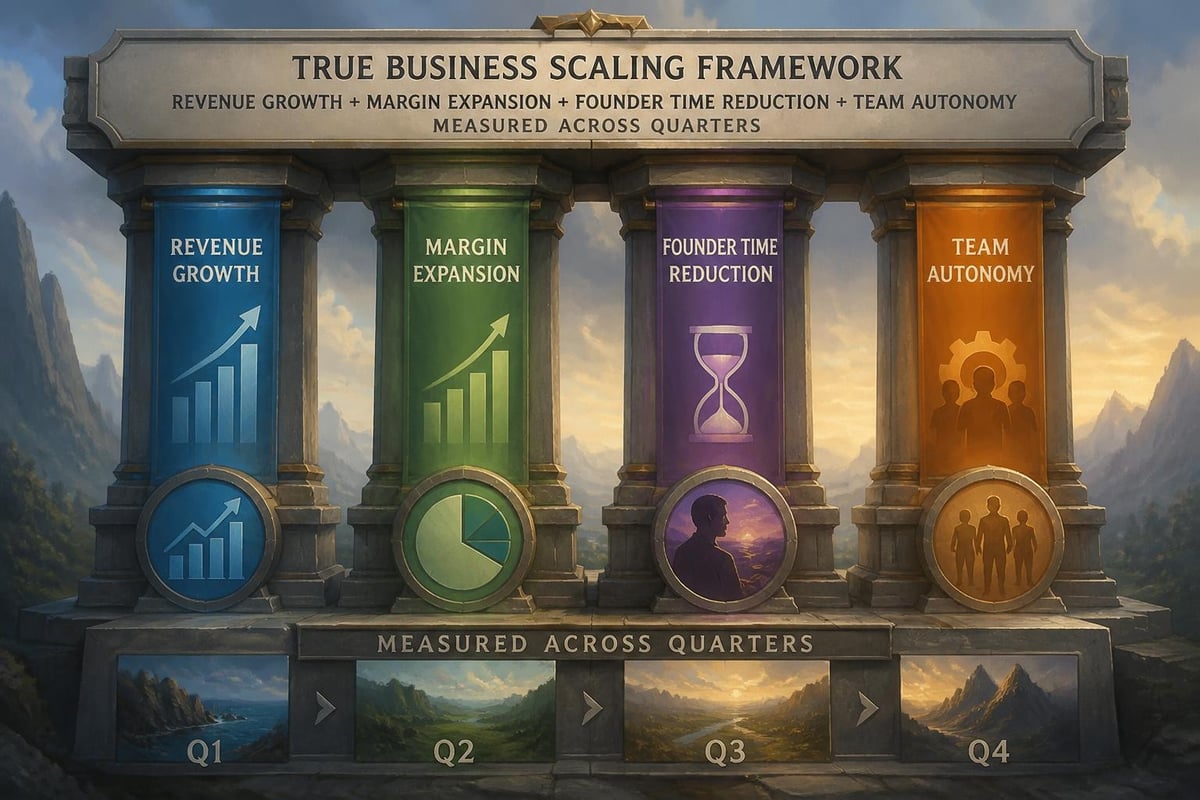
Social proof matters, but not the way most coaches present it. Testimonials praising someone's "energy" or "inspiration" tell you nothing about business results. When you find a coach, investigate their documented case studies that show before-and-after metrics: revenue growth, margin expansion, founder time reduction, team autonomy increases.
Research on workplace coaching effectiveness demonstrates measurable impact on performance when coaching interventions are structured and goal-specific. Demand that same rigor from any coach you consider.
4. Alignment on What Scaling Actually Means
Many coaches use "scaling" to mean "growing revenue." That's dangerously incomplete. True scaling means increasing revenue while decreasing founder dependence. It means expanding profit, not just top line. It means building a business that could theoretically operate without you for a quarter.
Before you find a coach and sign a contract, ensure they define scaling the same way you do. If they can't articulate how their work will reduce your operational involvement while increasing profitability, they're selling growth, not scale.
The Search Process: Where and How to Find a Coach
Once you've clarified what you need, the actual search becomes more surgical. You're not browsing; you're headhunting for a specific skill set.
Professional Associations and Accreditation
While coaching lacks universal regulation, reputable professional bodies maintain standards and directories. Organizations like the European Mentoring & Coaching Council establish ethical frameworks and competency benchmarks. Coaches who pursue these credentials signal commitment to professionalism beyond marketing.
However, don't confuse credentials with business acumen. A coach with every certification but no operational experience won't solve your bottleneck problems. Use accreditation as a baseline filter, not a final decision criterion.
Reverse Engineering Your Network
The most effective way to find a coach is often hidden in plain sight. Identify three businesses in adjacent industries (not direct competitors) that have scaled successfully in the past 24 months. Reach out to the founders and ask a single question: "Who helped you build the operational architecture that enabled your growth?"
This approach surfaces coaches who deliver results but may not have massive social followings. These are often the most valuable relationships because they're focused on client outcomes rather than personal brand building.
Industry-Specific Platforms
Generic coaching marketplaces rarely serve high-ticket service businesses well. Instead, look for:
- Strategic consultancies that work exclusively with service businesses at your revenue stage
- Mastermind communities where members share consultant referrals based on actual results
- Industry conferences where operational experts speak (not motivational speakers)
When you approach potential coaches through these channels, you've already filtered for relevant expertise. Understanding coaching psychology as a discipline helps you evaluate whether a coach's approach is grounded in evidence or simply persuasive rhetoric.
The Vetting Conversation: Questions That Reveal Truth
You've identified candidates. Now comes the critical evaluation. Most founders waste vetting calls on logistics and pricing. Instead, use these conversations to stress-test expertise.
Questions About Their Framework
"Walk me through your specific methodology for diagnosing operational bottlenecks in service businesses." Vague answers about "discovery sessions" are inadequate. You want to hear named diagnostic tools, specific assessment criteria, and a clear process.
"How do you measure whether your coaching engagement succeeded?" If they can't cite concrete metrics tied to profit and capacity, they're not operating at a strategic level.
"What percentage of your clients successfully reduce their operational involvement while growing revenue?" This question separates coaches who enable true scaling from those who just optimize hustle.
Questions About Their Experience
- "What's the largest service business you've helped scale, and what specific architectural changes did you implement?"
- "How do you approach the transition from founder-led delivery to team-led delivery?"
- "What's your framework for pricing strategy in high-ticket services?"
The depth and specificity of their answers matter more than the polish. You want operational scars and pattern recognition, not rehearsed elevator pitches.
The Investment Structure Conversation
When you find a coach you're seriously considering, get absolute clarity on the financial arrangement before emotions cloud judgment:
| Investment Component | What to Clarify | Why It Matters |
|---|---|---|
| Duration | Minimum commitment period | Prevents premature exits; ensures framework implementation |
| Fee Structure | Monthly retainer vs. project vs. equity | Aligns incentives; protects both parties |
| Scope Boundaries | What's included vs. additional services | Prevents scope creep and surprise bills |
| Success Guarantees | Performance milestones and recourse | Demonstrates coach confidence in methodology |
Premium coaching for scaling businesses typically ranges from $3,000 to $15,000 monthly depending on access level and scope. This isn't an expense; it's a capital allocation decision that should generate minimum 3x ROI within 12 months. If a coach can't articulate how their engagement will produce that return, keep searching.
Red Flags That Should End Your Search Immediately
Time is your scarcest resource. These warning signs should disqualify a coach instantly, no matter how compelling their marketing:
- They've never operated a business at your revenue level (studying entrepreneurship ≠ building one)
- Their methodology is "intuitive" or "customized to each client" (code for "I'm making this up as we go")
- They can't provide detailed case studies with metrics (testimonials about "transformation" don't count)
- They focus on mindset before operations (your limiting belief isn't the bottleneck; your delivery process is)
- They require long-term contracts without milestone gates (confident coaches tie payment to progress)
- They use celebrity endorsements instead of client results (influence ≠ competence)
If you're considering working with someone who triggers multiple red flags, you're not conducting due diligence; you're looking for permission to make an emotional decision. Stop. Restart your search with clearer criteria.

What to Expect Once You Find a Coach and Begin
Selecting the right coach is only the beginning. The engagement itself requires your active participation and operational honesty.
The First 30 Days: Diagnostic Deep Dive
Expect comprehensive assessment, not immediate action. A strategic coach will:
- Audit your current positioning and market authority
- Map your sales systems and conversion architecture
- Analyze client delivery workflows and outcome consistency
- Evaluate leadership boundaries and decision-making processes
This diagnostic phase feels slow but prevents expensive misdiagnosis. Resist the urge to "start implementing" before root causes are clear.
Months 2-4: Architecture Installation
This is where proprietary frameworks get embedded into your operations. Depending on your specific bottlenecks, you might:
- Restructure your service delivery to reduce founder dependency
- Install sales systems that convert without your personal involvement
- Rebuild your positioning to command higher prices with less objection resistance
- Create leadership protocols that enable team autonomy
Implementation is uncomfortable. You'll question whether the changes are worth the disruption. This is precisely when coaching accountability becomes valuable. Your coach should push through your resistance with evidence, not just encouragement.
Months 5-6: Optimization and Handoff
The final phase transitions ownership of the new architecture from coach to you. Expect:
- Documentation of all installed systems
- Team training on new processes
- Measurement dashboard setup for ongoing monitoring
- Contingency protocols for common edge cases
If your coach hasn't prepared you to operate independently after six months, they've created dependence rather than capability. The goal is to build sustainable operational frameworks that outlast the coaching relationship.
The ROI Calculation Every Founder Should Run
Before you find a coach and invest, model the expected return with brutal honesty:
Current State Analysis:
- Annual revenue
- Net profit margin
- Hours per week you work in delivery vs. on business
- Client acquisition cost and lifetime value
- Team efficiency and autonomy level
Desired Future State (12 months post-coaching):
- Target revenue increase
- Target margin expansion
- Reduced founder delivery hours
- Improved client outcomes and retention
- Team operating with less supervision
If installing the right operational architecture could increase your profit by $100k annually while reducing your delivery time by 20 hours per week, a $60k coaching investment with implementation support becomes obvious. If the projected impact is marginal, either your business isn't ready or you're talking to the wrong coach.
The Alternative to Finding the Wrong Coach
Many founders delay the decision to find a coach because previous experiences disappointed them. They hired someone charismatic who delivered motivation but not methodology. The engagement felt good but changed nothing structurally.
This creates a dangerous pattern: you keep trying to solve architectural problems with harder work, longer hours, and incremental optimizations. Meanwhile, your business grows more complex, your margins compress, and the ceiling gets lower.
The alternative isn't to avoid coaching; it's to demand strategic consultancy instead of motivational speaking. When you work with teams that specialize in operational architecture for service businesses at your exact revenue stage, the conversation shifts from "Can you help me?" to "Here's precisely what we'll install and the ROI you should expect."
For women-owned high-ticket service businesses generating $250k to $5M, the path from operational chaos to predictable profit isn't mystical. It's architectural. The right coaching relationship installs that architecture, measures the results, and transfers complete ownership to you.
The decision to find a coach represents a turning point: you're acknowledging that working harder won't solve what's structurally broken, and you're ready to invest in the operational architecture that enables clean scaling. If you're leading a women-owned high-ticket service business wrestling with founder bottlenecks and operational drag, Rise Reign Rule specializes in exactly this transformation through our Profit Architecture framework, addressing positioning, acquisition, delivery, and leadership simultaneously to create predictable profit without founder dependency.


