
Service Coaching That Drives Revenue and Client Results
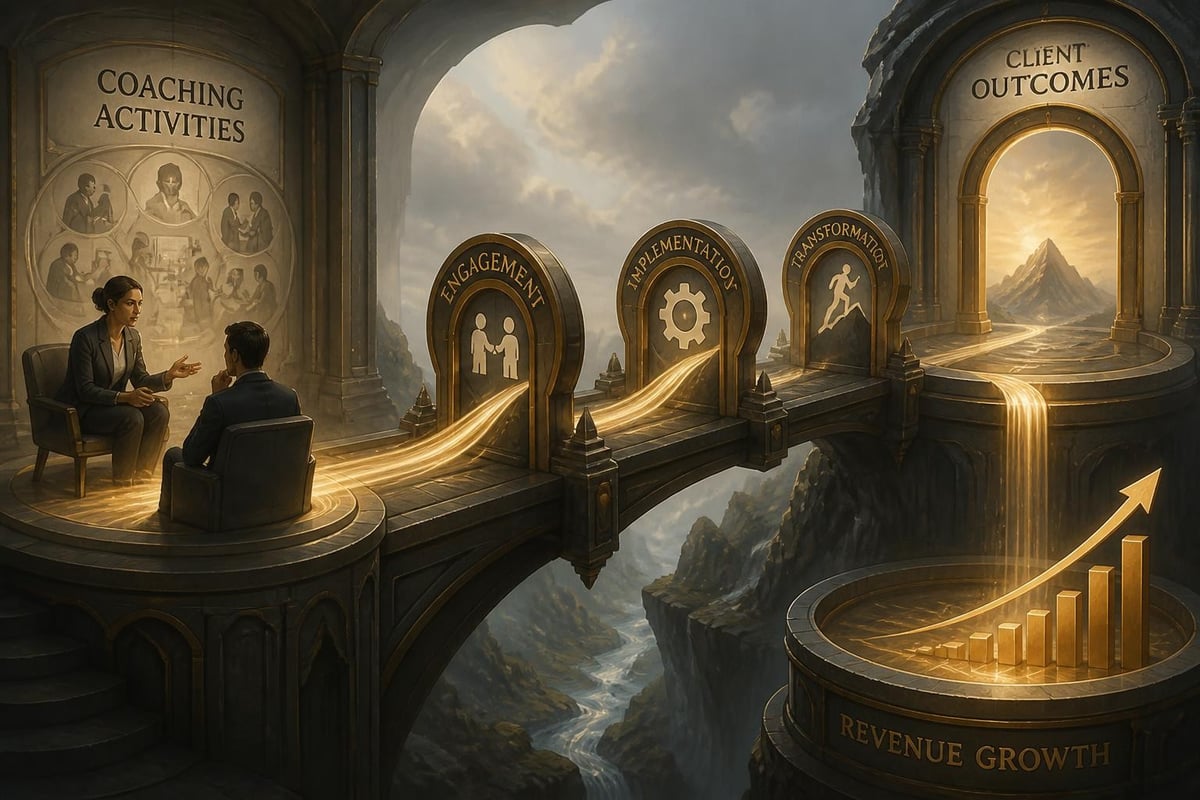
The difference between a service business stuck at $400k and one confidently scaling to multi-millions often comes down to one critical factor: how well you coach your team and clients through service delivery. Service coaching isn't just about teaching skills or checking boxes. It's a strategic system that transforms how you deliver outcomes, eliminate founder dependency, and create predictable results across every client engagement. For women-owned high-ticket service businesses, mastering this discipline means breaking through revenue ceilings while actually working fewer hours.
Why Service Coaching Drives Business Scalability
Service coaching creates the operational backbone that allows your business to grow beyond your personal capacity. When you're billing $10k, $25k, or $50k+ per client, every delivery interaction carries massive financial weight. One confused team member or inconsistent client experience can crater your referral engine and tank your profit margins.
The problem most founders face isn't lack of expertise. It's that their expertise lives exclusively in their head. You know exactly how to diagnose client problems, design solutions, and navigate tricky conversations. But if that knowledge isn't systematically transferred to your team through structured service coaching, you remain the bottleneck.
Consider these operational realities:
- High-ticket clients expect premium consistency across every touchpoint
- Team members need frameworks, not just task lists, to make judgment calls
- Client outcomes must be repeatable regardless of who's delivering the work
- Founder availability becomes a constraint that limits revenue capacity
Strategic coaching best practices transform these challenges into scalable systems. When implemented correctly, service coaching becomes the mechanism that encodes your methodology into your team's DNA.

The Revenue Impact of Systematic Service Coaching
Companies that implement rigorous service coaching programs see measurable business outcomes. Research shows that structured coaching can increase performance metrics by 20-75%, depending on the service context. These aren't vanity metrics. They translate directly to client retention, referral rates, and capacity to take on additional revenue without proportional cost increases.
In the high-ticket service world, even small performance improvements compound dramatically. If your average client pays $30k and coaching helps your team deliver results that generate one additional referral per quarter, you've added $120k in annual revenue. If it reduces client ramp time by 30%, you can serve more clients with the same team footprint.
The experience coaching dimension becomes particularly crucial at higher price points. Your clients aren't just buying deliverables; they're investing in transformation. Service coaching ensures every team interaction reinforces the premium positioning that justifies your pricing.
Building Your Service Coaching Framework
Creating an effective service coaching program requires more structure than most founders initially realize. This isn't about occasional feedback or annual reviews. It's about installing deliberate systems that develop capability, ensure quality, and protect client outcomes.
The Four Pillars of Effective Service Coaching
1. Competency Mapping
Start by documenting exactly what mastery looks like in each client-facing role. What decisions do team members need to make independently? What frameworks guide those decisions? What outcomes must they consistently produce?
Create detailed competency maps that outline:
- Technical skills required for service delivery
- Client communication standards and escalation protocols
- Problem-solving frameworks for common scenarios
- Quality benchmarks for each deliverable type
2. Structured Development Pathways
Service coaching fails when it's reactive and inconsistent. Build progressive development tracks that move team members from foundational competence to advanced mastery. Each level should have clear performance criteria, learning resources, and coaching checkpoints.
| Development Stage | Focus Areas | Coaching Frequency | Success Metrics |
|---|---|---|---|
| Foundation (0-3 months) | Core methodology, client communication basics | Weekly 1:1 sessions | Can deliver standard modules with oversight |
| Intermediate (4-9 months) | Independent delivery, problem diagnosis | Bi-weekly sessions | Handles 80% of scenarios without escalation |
| Advanced (10+ months) | Complex situations, client advisory | Monthly strategic coaching | Drives client outcomes independently |
3. Real-Time Performance Feedback
The most powerful service coaching happens in context, not in retrospective reviews. Implement systems that allow you to observe actual client interactions, review work products, and provide immediate corrective guidance. Call center coaching best practices emphasize the importance of continuous feedback loops over periodic evaluations.
Use these coaching moments strategically:
- Listen to client calls and debrief on communication effectiveness
- Review deliverables before client submission with developmental feedback
- Shadow complex client interactions and coach through decision points
- Conduct post-project retrospectives that extract learnable patterns
4. Measurement and Accountability
Service coaching without metrics is just conversation. Define specific performance indicators that connect coaching investments to business outcomes. Track both leading indicators (skill development, confidence levels) and lagging indicators (client satisfaction, project profitability, delivery timelines).
Overcoming Common Service Coaching Challenges
Even with solid frameworks, most founders encounter predictable obstacles when scaling service coaching. Understanding these challenges upfront allows you to design around them rather than fighting fires later.
Challenge 1: Founder Time Constraints
You're already stretched thin between sales, delivery, and operations. Adding structured coaching feels impossible. The solution isn't finding more time; it's engineering coaching into your existing workflows.
Practical implementation strategies:
- Bundle coaching with quality assurance: Review work products with developmental feedback built into your existing QA process
- Leverage group coaching: Address common challenges in team sessions rather than repeating the same coaching individually
- Create self-service learning assets: Record your coaching on common topics once, then reference those resources in future situations
- Delegate foundational coaching: Train senior team members to handle initial skill development, reserving your coaching for advanced scenarios
Agent coaching best practices demonstrate how high-performing organizations structure coaching to be efficient without sacrificing effectiveness. The key is systematization, not heroic effort.
Challenge 2: Inconsistent Service Delivery Standards
When different team members approach client work differently, outcomes vary wildly. This inconsistency destroys your premium positioning and creates operational chaos. Service coaching must establish non-negotiable standards while still allowing appropriate flexibility.
Define your "tight-loose" framework clearly. What elements of service delivery are non-negotiable (tight) and must be executed identically every time? What elements allow for individual judgment and adaptation (loose) based on client context?
Tight elements typically include:
- Client communication standards and response timeframes
- Quality benchmarks for deliverables
- Documentation and handoff protocols
- Escalation procedures for problems or scope changes
Loose elements might include:
- Specific tactics chosen within approved methodology
- Communication style adapted to client preferences
- Sequencing of delivery components based on client readiness
- Personalization of examples and frameworks to industry context
Challenge 3: Resistance to Coaching
High-performers sometimes resist coaching, viewing it as remedial or micromanagement. This is particularly common if you've hired experienced team members who've developed their own working styles. The solution is reframing service coaching as performance optimization, not deficit correction.
Position coaching as:
- Strategic development: Helping talented people become exceptional at your specific methodology
- Leverage creation: Encoding their insights into team knowledge that amplifies everyone's capability
- Client outcome insurance: Ensuring every client gets the premium results that protect referrals and retention
Companies like Sagility have demonstrated that AI-enhanced coaching can personalize development while reducing the administrative burden that creates resistance. The focus shifts from oversight to enablement.
Scaling Service Coaching Beyond the Founder
The ultimate test of your service coaching system is whether it continues functioning when you're not personally delivering it. This transition from founder-led to team-enabled coaching represents a critical inflection point in business scaling.
Building Your Coaching Infrastructure
Documenting Your Methodology
Your expertise must be explicitly captured, not assumed. Create comprehensive documentation of your service delivery approach, including decision frameworks, quality standards, and client management principles. This documentation becomes the curriculum for all future coaching.
Effective documentation includes:
- Process maps showing how client engagements flow from kickoff to completion
- Decision trees guiding team members through common choice points
- Template libraries demonstrating excellence in deliverables
- Case studies illustrating how to apply frameworks in various scenarios
The difference between mentoring, consulting, and coaching matters here. Service coaching focuses on developing capability to execute your methodology, not just transferring knowledge or solving problems.
Developing Internal Coaches
As you scale beyond 5-7 team members, you need a coaching layer between yourself and frontline delivery staff. Identify high-performers who demonstrate both technical excellence and teaching ability. Invest in developing their coaching skills explicitly.
Your internal coach development program should cover:
- How to observe performance objectively and identify development opportunities
- Techniques for delivering feedback that motivates rather than deflates
- Facilitation skills for leading group learning sessions
- Assessment frameworks for evaluating readiness to advance

Technology-Enabled Coaching Scale
Modern service businesses can leverage technology to extend coaching reach without diluting quality. Consider platforms and tools that allow you to:
- Record and share coaching sessions so insights reach beyond the original recipient
- Track competency development across the team with objective assessments
- Automate feedback collection from clients to identify coaching opportunities
- Create searchable knowledge bases where team members find guidance on-demand
The Brothers Services case study shows how modernizing coaching infrastructure resulted in a 75% improvement in performance metrics. The lesson isn't that technology replaces personal coaching, but that it extends its impact exponentially.
Service Coaching as Profit Architecture
In the context of high-ticket service businesses, service coaching isn't an HR initiative. It's a profit lever that directly impacts your ability to scale cleanly. Every dollar invested in systematic coaching returns multiples through improved capacity, reduced errors, and stronger client outcomes.
The ROI Calculation
Consider the actual economics of service coaching in a $500k-$2M high-ticket business:
| Investment Area | Annual Cost | Return Generated | Net Impact |
|---|---|---|---|
| Founder coaching time (4 hrs/week) | $52k (opportunity cost) | $180k (3 additional clients served) | +$128k |
| Structured learning materials | $15k (development + tools) | $90k (reduced rework, faster ramp) | +$75k |
| Team development programs | $25k (training + facilitation) | $120k (improved retention, performance) | +$95k |
These numbers reflect conservative estimates based on documented coaching outcomes from companies implementing systematic programs. Your actual returns depend on execution quality and business model specifics, but the directional impact is consistent.
Integration with Sales and Positioning
Service coaching creates a strategic advantage that extends beyond operational efficiency. When your team consistently delivers exceptional outcomes through well-coached execution, you generate:
Stronger case studies and testimonials: Coached teams produce better client results, which fuel your positioning and authority in the market.
Higher referral velocity: Consistent service delivery creates predictable referral patterns because clients know exactly what to expect and can confidently recommend you.
Premium pricing justification: When prospects see evidence of systematic excellence (not just founder heroics), they understand why your pricing reflects true business transformation, not just deliverables.
This creates a virtuous cycle where high performance coaching in service delivery strengthens every other aspect of your business model. Your acquisition systems work better because delivery outcomes are predictable. Your leadership capacity expands because you're not trapped in quality control. Your profit margins improve because rework and client issues decrease.
The Leadership Dimension
Perhaps the most overlooked benefit of mature service coaching is how it transforms your role as founder. Instead of being the person who knows how to do everything, you become the architect of systems that develop people who know how to do everything.
This shift is psychological as much as operational. It requires:
- Trusting processes over personal oversight: Building confidence that coached teams will make good decisions
- Accepting variation in execution style: Recognizing that different people can achieve excellent outcomes through different approaches
- Delegating judgment, not just tasks: Empowering team members to make consequential decisions within defined frameworks
- Measuring outcomes, not activities: Evaluating coaching effectiveness by client results and business metrics, not coaching hours logged
The NHS coaching case study demonstrates how bespoke coaching approaches can reduce stress and improve well-being even in high-pressure service environments. For founders, this translates to breaking the cycle of being irreplaceable, which is the ultimate bottleneck.
Implementing Service Coaching in 2026
The landscape of service coaching continues evolving. In 2026, the businesses winning at scale combine foundational coaching principles with contemporary tools and expectations. Your implementation strategy should reflect both timeless effectiveness and current realities.
Start with Your Highest-Impact Role
Don't try to build comprehensive service coaching across your entire organization simultaneously. Identify the single role that most directly impacts client outcomes and revenue capacity. For many high-ticket service businesses, this is your lead delivery consultant or client success manager.
Build your complete coaching framework for this role first:
- Competency mapping: Document what mastery looks like in exhaustive detail
- Assessment tools: Create objective ways to measure current capability and progress
- Learning curriculum: Develop the resources, frameworks, and practice opportunities needed for development
- Coaching cadence: Establish the rhythm and structure of coaching interactions
- Success metrics: Define what coaching success looks like in business terms
Once this pilot framework proves effective, extend it to other roles using the same methodology.
Create Coaching Moments, Not Just Coaching Sessions
The most effective service coaching happens continuously, not just during scheduled 1:1s. Engineer your workflows to create natural coaching moments:
- Pre-client interaction prep: Brief 10-minute sessions before important client meetings to align on approach
- Real-time shadowing: Join client calls or delivery sessions with live coaching in the moment
- Rapid retrospectives: Five-minute debriefs immediately after client interactions to capture learning while fresh
- Peer coaching circles: Small group sessions where team members coach each other through challenges
These micro-coaching interactions often generate more development than monthly formal sessions because they're contextual and immediately applicable.
Measure What Matters
Track coaching effectiveness through business outcomes, not just participation metrics. The goal isn't perfect attendance at coaching sessions. It's measurable improvement in service delivery quality and business performance.
Essential coaching metrics for high-ticket service businesses:
- Client outcome achievement rate: Percentage of clients hitting their defined success metrics
- Delivery profitability: Margin per client after accounting for delivery hours and resources
- Team utilization: Percentage of available team capacity sold and delivered
- Client satisfaction and NPS: Quantified client feedback on service delivery experience
- Time to competence: How quickly new team members reach independent productivity
- Founder dependency ratio: Percentage of delivery requiring direct founder involvement
These metrics tell you whether service coaching is actually moving your business forward or just creating activity without results.
Service coaching transforms high-ticket service delivery from an art dependent on founder heroics into a science that scales predictably. When you systematically develop your team's capability to diagnose client needs, execute your methodology, and drive outcomes independently, you unlock the capacity to grow revenue without proportionally increasing your personal workload. Rise Reign Rule helps women-owned service businesses install the Profit Architecture framework that makes this scalability possible, addressing the operational drag and founder bottlenecks that prevent clean growth. Ready to build service delivery systems that work without you? Let's architect your path to predictable profit and sustainable scale.


