
Digital Coaches Transform High-Ticket Service Scaling
The promise of scaling a high-ticket service business without cloning yourself has driven countless founders to search for leverage. You've hired team members, created templates, and systematized processes, yet you still find yourself deep in client delivery, answering the same questions, providing the same nudges, holding the same accountability conversations. This operational drag keeps you from the strategic work that actually grows your business. Enter digital coaches: AI-powered systems that can handle repetitive coaching touchpoints while you focus on the high-value transformations only you can deliver.
The Reality Behind Digital Coaching Technology
Digital coaches represent a category of AI tools designed to provide ongoing guidance, accountability, and behavior change support. Unlike static courses or one-time consultations, these systems engage users through conversations, prompts, and adaptive feedback loops. Recent research on conversational-agent digital coaches demonstrates their feasibility in lifestyle and mental health contexts, showing promising acceptability and engagement metrics.
For women-owned service businesses operating in the $250k–$5M revenue range, this technology creates an intriguing opportunity. Your clients pay premium prices for transformation, not just information. They need ongoing support, accountability, and course correction between your strategic sessions. Traditionally, this meant choosing between founder burnout or hiring expensive mid-level coaches who dilute your brand.
Where Digital Coaches Actually Add Value
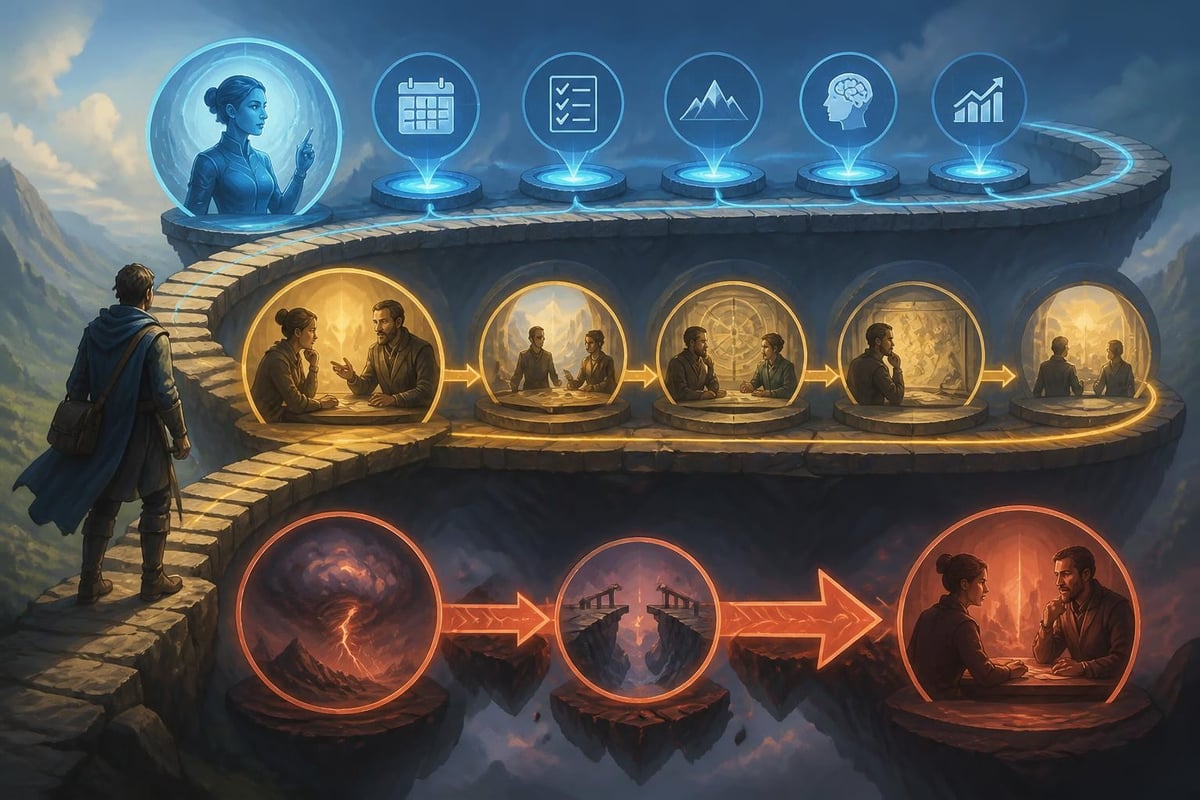
The sweet spot for digital coaches sits in the repetition zone. Think about your client journey right now. Between onboarding and strategic sessions, your clients likely need:
- Daily or weekly accountability check-ins
- Reminders about framework implementation steps
- Answers to procedural questions they've asked before
- Encouragement when momentum stalls
- Data collection about their progress and challenges
These touchpoints matter enormously for client outcomes, yet they drain founder energy and don't require your strategic expertise. A well-designed digital coach can handle this middle layer while flagging situations that need human intervention.
Building Digital Coaches That Protect Premium Positioning
The greatest risk when implementing digital coaches is cheapening your brand. Your high-ticket clients don't want to feel like they're talking to a chatbot instead of receiving your expertise. The solution lies in strategic positioning and thoughtful design.
Architecture Principles for High-Ticket Integration
First, define clear boundaries. Your digital coach should never attempt to replace your strategic guidance. Instead, position it as your methodology made accessible between sessions. Frame it as "having access to the framework 24/7" rather than "AI coaching."
Second, over-invest in personalization. Generic responses destroy trust at premium price points. Your digital coach should reference the client's specific business model, previous conversations, and stated goals. This requires robust data integration and careful prompt engineering.
Third, design explicit escalation paths. When a client asks a question beyond the digital coach's scope, it should gracefully hand off to your team with context intact. This prevents the frustration of repeating information and maintains service quality.
| Design Element | Low-End Implementation | High-Ticket Implementation |
|---|---|---|
| Conversation Style | Generic templates | Client-specific context and business details |
| Escalation | "Contact support" button | Intelligent routing with conversation history |
| Branding | "AI Assistant" | "Your [Framework Name] Guide" |
| Integration | Standalone tool | Embedded in existing client portal |
| Data Usage | Anonymous interactions | Full CRM integration and progress tracking |
The technical sophistication required for high-ticket digital coaches exceeds what most founders initially expect. You're not just implementing a chatbot; you're extending your proprietary methodology into an always-available format.
The Operational Architecture of Effective Digital Coaching
Moving beyond concept to implementation requires understanding how digital coaches fit into your existing Profit Architecture. Recent systematic reviews of AI and hybrid coaching interventions reveal patterns in what works and what fails.
Integration Points Within Your Service Delivery
Onboarding Acceleration: New clients face the steepest learning curve. They're absorbing your framework, understanding terminology, and figuring out how to apply concepts to their unique situation. A digital coach can provide immediate answers to foundational questions, freeing your onboarding calls to focus on strategic customization rather than explaining basics.
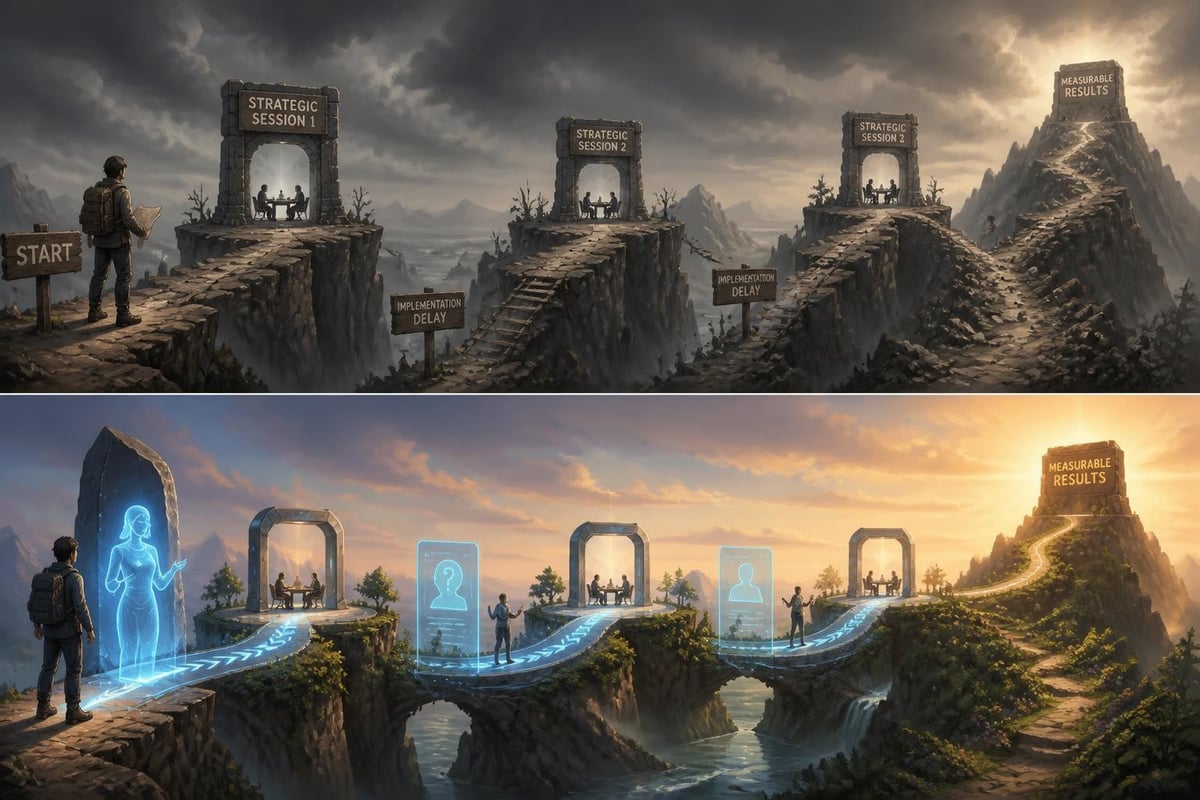
Implementation Accountability: Between your strategic sessions, clients execute on decisions. They implement new positioning, build sales systems, or restructure delivery processes. Digital coaches excel at daily or weekly check-ins asking: "Did you complete yesterday's priority? What's blocking you? What's tomorrow's focus?" This consistency dramatically improves follow-through without adding to your calendar.
Data Collection and Pattern Recognition: Before each strategic session, you need to know what's working and what's stuck. Digital coaches can gather this intelligence continuously, asking targeted questions and compiling insights. You walk into sessions fully briefed, making every minute count.
Framework Reinforcement: Your proprietary methodology differentiates your service. Digital coaches can quiz clients on concepts, provide examples of application, and correct misunderstandings in real time. This deepens the client's mastery without repetitive teaching from you.
The research on infusing behavior-science principles into coaching AI offers valuable technical guidance for building these capabilities responsibly and effectively.
Measurement Systems That Matter
You can't improve what you don't measure. Digital coaches generate remarkable data about client engagement and progress when properly instrumented.
- Engagement frequency: How often clients interact reveals motivation and momentum
- Question patterns: Recurring questions signal gaps in your core training materials
- Completion rates: Whether clients follow through on stated commitments
- Escalation triggers: Which topics consistently require human intervention
- Sentiment analysis: Client confidence and satisfaction between formal check-ins
This data transforms your delivery system. You spot at-risk clients before they churn. You identify which framework elements need clarification. You quantify the impact of your coaching in ways client testimonials alone cannot capture.

Technical Considerations for Service Business Leaders
Most founders approaching digital coaches underestimate the technical lift. You're not just licensing software; you're building a system that represents your methodology and protects your client relationships. Understanding leadership coaching skills helps inform how these tools should interact.
Build vs. Buy Decisions
Option 1: Custom Development provides complete control over conversation design, data handling, and brand experience. You own the code and can iterate based on client feedback. However, you're responsible for AI model management, security, compliance, and ongoing maintenance. For most service businesses below $2M in revenue, this represents excessive overhead.
Option 2: White-Label Platforms offer coaching-specific features like goal tracking, accountability prompts, and progress dashboards. You configure workflows and customize branding, but you're limited by the platform's architecture. This works well if your methodology aligns with standard coaching models.
Option 3: General AI Tools + Integration Layer uses platforms like ChatGPT or Claude with custom prompting and integration middleware. You get cutting-edge language capabilities with moderate customization options. The risk lies in platform changes beyond your control and potential data privacy concerns at high-ticket price points.
The right choice depends on your technical team, budget, and timeline. Most successful implementations start with Option 2 or 3 for validation, then migrate to Option 1 once the use case proves valuable.
Data Privacy and Ethical Boundaries
Your high-ticket clients share sensitive business information. Implementing digital coaches requires ironclad data handling practices. Every conversation contains proprietary strategies, financial details, and competitive positioning. A data breach or unauthorized AI training on client conversations would destroy trust permanently.
Establish clear data governance: Document what data the digital coach accesses, how long conversations are retained, whether they're used for model training, and who can review transcripts. Make this transparent to clients upfront.
Implement access controls: Not every team member needs full visibility into digital coach conversations. Role-based permissions protect client confidentiality while allowing appropriate oversight.
Plan for AI hallucinations: Large language models occasionally generate confident but incorrect responses. Your digital coach needs guardrails preventing it from making up facts about your methodology, client results, or strategic recommendations. Build verification layers and limit the scope of what it claims as fact.
Scaling Client Outcomes Without Scaling Your Calendar
The ultimate test of digital coaches is whether they improve client results while reducing founder involvement. This seems contradictory, yet it's precisely the leverage point service businesses need. The principles of effective personal development companies apply when structuring these systems for maximum impact.
Client Success Patterns Enabled by Digital Coaching
Faster Time to Results: Clients who can access framework guidance immediately don't wait days for their next session to answer blocking questions. They maintain momentum, complete implementation faster, and see results sooner. This improves testimonials and case studies, strengthening your market positioning.
Deeper Framework Mastery: Repetition builds expertise. Digital coaches can quiz clients, provide spaced repetition of key concepts, and reinforce methodology until it becomes second nature. Clients who truly master your framework become powerful referral sources and case studies.
Higher Accountability Follow-Through: The gap between intention and action kills client outcomes. Daily digital check-ins create the accountability structure that human coaches provide, but without the scheduling friction or cost. Clients complete more of what they commit to doing.
Earlier Problem Detection: Digital coaches spot when clients disengage, express confusion, or hit roadblocks. This early warning system allows you to intervene before small issues become churn risks. You allocate your attention strategically rather than reactively.
Studies on just-in-time adaptive interventions delivered via smartphone provide proof-of-concept for how mobile digital coaches can deliver support precisely when clients need it most.
Implementation Roadmap for Service Businesses
Moving from concept to deployed digital coach requires methodical execution. Rushing implementation creates client confusion and team frustration. The strategic approach recognizes that coaching skills must be translated into systematic prompts and decision trees.
Phase One: Framework Documentation and Conversation Design
You can't build a digital coach without first codifying your methodology. This means documenting:
- Core framework components and how they interconnect
- Common client questions and your standard responses
- Diagnostic questions you ask to understand client situations
- Decision trees for recommendations based on client context
- Boundaries between digital coach guidance and strategic human sessions
This documentation process often reveals gaps in your methodology. If you struggle to articulate the logic behind recommendations, your digital coach will fail. This forced clarity actually strengthens your entire service delivery, not just the digital component.
Phase Two: Pilot with Ideal Clients
Select 3-5 clients who are already succeeding with your program. They understand your methodology, trust your brand, and will provide honest feedback. Position the digital coach as early access to a premium enhancement, not a replacement for existing touchpoints.
During the pilot:
- Monitor all digital coach conversations for quality and accuracy
- Schedule weekly feedback sessions with pilot clients
- Track engagement metrics and identify usage patterns
- Document every instance where the digital coach fails or frustrates clients
- Refine prompts, escalation triggers, and conversation flows continuously
This phase typically requires 60-90 days. Rushing it leads to poor client experiences that damage your brand.
Phase Three: Team Training and Integration
Your team must understand how digital coaches fit into service delivery. Client success managers need training on:
- How to introduce the digital coach during onboarding
- When to reference digital coach conversations in strategic sessions
- How to use engagement data to identify at-risk clients
- Escalation protocols when the digital coach flags issues
The research on coaching, teams, and new technologies offers perspectives on team-level integration that prove valuable during this phase.
| Implementation Phase | Duration | Primary Goals | Success Metrics |
|---|---|---|---|
| Framework Documentation | 2-4 weeks | Codify methodology, create conversation architecture | Complete decision trees, 50+ FAQ responses documented |
| Pilot Program | 60-90 days | Validate concept, refine user experience | 70%+ engagement rate, client satisfaction 8+/10 |
| Team Training | 2-3 weeks | Integration into service delivery | Team confidence scores, correct escalation rates |
| Full Rollout | 30 days | Scale to entire client base | Adoption rates, outcome improvements, founder time reclaimed |
Strategic Positioning in Your Market
Digital coaches can differentiate your service or commoditize it, depending on how you position the capability. In a market where competitors still rely entirely on human delivery, you have an opportunity to claim innovation leadership. However, poor positioning makes you sound like you're replacing premium service with automation.
Messaging Frameworks That Elevate Rather Than Cheapen
Position as methodology access, not cost reduction. Frame your digital coach as "having our proven framework available 24/7 between strategic sessions" rather than "reducing the need for coaching calls." Clients want more value, not fewer interactions with you.
Emphasize the hybrid model. Make it clear that digital coaches enhance human expertise rather than replace it. "Strategic decisions require human judgment; daily accountability requires consistent structure. You get both."
Showcase client outcomes. If pilot clients achieve results faster or more consistently, that's your positioning. "Clients working with our framework acceleration system complete implementation in 90 days versus 6 months."
Address privacy proactively. High-ticket clients care deeply about confidentiality. Lead with your data protection measures rather than waiting for concerns to arise.
The way you position digital coaches signals your understanding of what premium clients actually value. They're not buying your time; they're buying transformation. If your digital coach accelerates that transformation, it justifies premium pricing rather than threatening it.
The Founder Leverage Equation
Every hour you spend answering repeat questions, providing basic accountability, or explaining framework fundamentals represents misallocated expertise. Your zone of genius involves strategic pattern recognition, customized problem-solving, and high-stakes decision support. Digital coaches create founder leverage by handling everything else.
Calculating Your Leverage Opportunity
Map every client touchpoint in your current delivery model. For each touchpoint, ask:
- Does this require my unique strategic expertise?
- Is this a repeat conversation I've had with multiple clients?
- Could a well-designed digital coach handle this 80% as effectively?
- What would I do with the reclaimed time?
Most founders discover that 30-50% of current client touchpoints qualify for digital coach delegation. This isn't about doing less for clients; it's about reallocating your energy to higher-impact activities.
If you currently spend 20 hours weekly in client delivery and digital coaches can handle 40% of those touchpoints effectively, you reclaim 8 hours. That's enough time to:
- Develop advanced framework modules that increase client results
- Create content that builds market authority and drives inbound leads
- Personally handle sales conversations that close high-ticket contracts
- Finally implement the management coaching systems your growing team needs
This is the operational leverage that enables clean scaling. You serve more clients at higher quality without proportionally increasing founder hours.
Risk Mitigation and Contingency Planning
No technology implementation is risk-free, especially when it touches client relationships. Understanding potential failure modes and planning mitigation strategies protects your business.
Common Failure Patterns and Prevention
Risk: Clients feel deprioritized. If the digital coach is introduced poorly, clients may interpret it as reducing access to you. Mitigation: Position it as adding capability between existing touchpoints, not replacing them. Maintain your current strategic session cadence while adding digital coach support.
Risk: AI generates incorrect guidance. Language models can hallucinate facts or misapply your methodology. Mitigation: Implement strict guardrails limiting what the digital coach claims as fact. Test extensively before client-facing deployment. Build feedback mechanisms so clients can flag concerns.
Risk: Low adoption rates. If clients don't engage with the digital coach, you've invested in unused capability. Mitigation: Design intrinsic motivation into the experience. Make it genuinely useful, not just another login to remember. Integrate it into existing workflows rather than adding new places to check.
Risk: Data breach or privacy concerns. Client conversations contain sensitive information. Mitigation: Choose platforms with robust security certifications. Implement encryption, access controls, and clear data retention policies. Be transparent with clients about data handling.
Risk: Technical failures during critical moments. Downtime when a client needs support damages trust. Mitigation: Select reliable platforms with strong SLAs. Build redundancy into critical pathways. Maintain human escalation options that never depend on the digital coach functioning.
Building contingency plans before problems arise demonstrates the operational sophistication that women-owned service businesses need to scale cleanly from $250k to $5M and beyond.
Digital coaches represent a powerful leverage tool for high-ticket service businesses, but only when implemented with the same strategic rigor you bring to client delivery. The technology enables you to scale client outcomes and reclaim founder time, creating the operational freedom that fuels sustainable growth. If you're ready to architect profit systems that eliminate founder bottlenecks while protecting your premium positioning, Rise Reign Rule specializes in helping women-owned service businesses install the frameworks that transform operational drag into clean scaling.


